Why Every Video Game Movie Feels Like an Isekai Now, and Why It's Getting Old
The Minecraft movie teaser disappointingly relies on the overused isekai trope, mirroring the generic 'fish-out-of-water' template seen in adaptations like Sonic and Super Mario Bros. This predictable approach feels like a missed opportunity for creativity in video game storytelling.
So, the first teaser for the Minecraft movie dropped, and let me tell you, it hit my expectations like a fist hitting a tree in the game—total splinters. It looks like the most generic kids' movie out there, the green screen use is painfully obvious, and the humor... well, the whole "llamas are so funny, dude" vibe feels like it's been sitting in a chest for a decade. Not my thing, you know?
I'm not a hardcore Minecraft player myself. I dip in every couple of years, build a little something, and that's about it. But I am a fan of the director, Jared Hess. Remember Napoleon Dynamite? That was his. Nacho Libre? Also his. He's had a bit of a rocky road since then, with some movies that... let's just say didn't light the world on fire. But after eight years, he's back with a massive project: Minecraft. And look, this thing is going to make money. It's too big to fail. Everyone who grew up with it will show up. But man, it's a bummer that his big comeback is using the same old trick.
What trick, you ask? The fish-out-of-water story. Or, for my anime friends, the isekai. It's everywhere! Think about it:
-
Sonic the Hedgehog: Zapped from his video game world to live-action Montana.
-
The Super Mario Bros. Movie: Plumbers from Brooklyn to the Mushroom Kingdom. (The old live-action one did this too!)
-
Monster Hunter (2020): Soldiers pulled through a portal to fight monsters.
-
The newer Jumanji movies: Not a game adaptation, but same idea—people sucked into a video game world.
It's like filmmakers found one template and just keep hitting copy-paste. 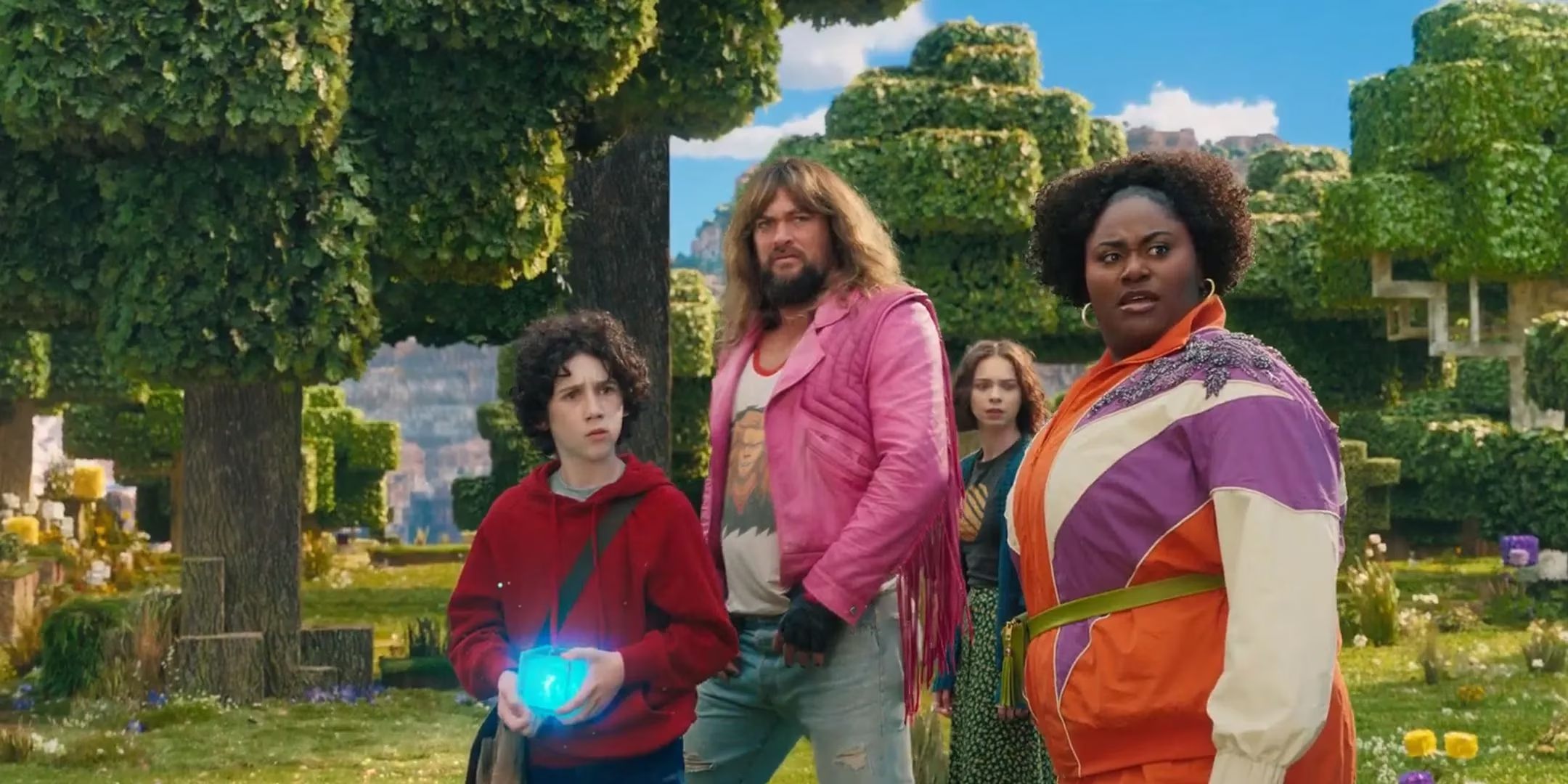
Now, don't get me wrong, it's not the only way to do this. Plenty of adaptations do their own thing:
| Adaptation Style | Examples |
|---|---|
| Straightforward Adaptation | The Last of Us, Uncharted, The Witcher, Tomb Raider |
| Close to Source Material | Pokemon Detective Pikachu, Ratchet & Clank, Borderlands |
| Real-World Stories | Tetris, Gran Turismo, Dumb Money |
| Original Game Worlds | Ready Player One, Free Guy |
See? There are so many ways to tell these stories. So why does everyone keep going back to the "person from our world gets dumped somewhere weird" well? 🤔
I get the logic, honestly. When you think about it, starting a new video game is an isekai experience. You're thrown into a new world with new rules. You have to figure everything out:
-
What can I interact with?
-
What are the physics here?
-
Why can't I swim in this water even though I'm a frog? (Looking at you, Frogger!).
-
For years in Zelda, you couldn't just chop down a tree. You had to wait for Breath of the Wild for that freedom!
The game's tutorial is basically you getting your "sea legs" for this strange new place. So, in a way, using an isekai setup in a movie mirrors our actual experience as players. It's a shortcut to make the audience feel the same wonder and confusion as the protagonist.
But here's the kicker: if every big video game movie uses this trick, it stops being special. It stops making the game world feel strange and magical. Instead, it just makes every movie feel... familiar. Predictable. We've seen this portal before. We know exactly how the character will react when they see a Creeper or a Goomba for the first time. The surprise is gone.
So, while I understand why the Minecraft movie and others take this path, I can't help but wish they'd try something new. The gaming world is vast and full of incredible stories that don't need a real-world anchor. By 2026, I hope we start seeing more filmmakers brave enough to just dive into the game's universe headfirst, without the safety net of a confused outsider as our guide. Sometimes, the most immersive experience is when you're already there, you know? Just let us live in the world for a while.