When Franchises Shrink: The Surprising Brilliance of Linear Spinoffs in 2026
Focused spinoffs like Fallout Shelter and Thronebreaker cure open-world fatigue by trading vast horizons for tight, intimate gameplay.
There’s a quiet but unmistakable trend reshaping how I think about my favorite game series here in 2026, and it’s not another map filled with a thousand icons. A growing number of blockbuster franchises—names that practically built the modern open-world cathedral—are releasing spinoffs that deliberately strip away the endless horizons. It feels like watching a painter who mastered vast murals suddenly obsess over a single, intricate miniature, and I’m here for it. The joy isn’t in what’s missing, but in what tight focus brings: a pulse that open-world fatigue often numbs.
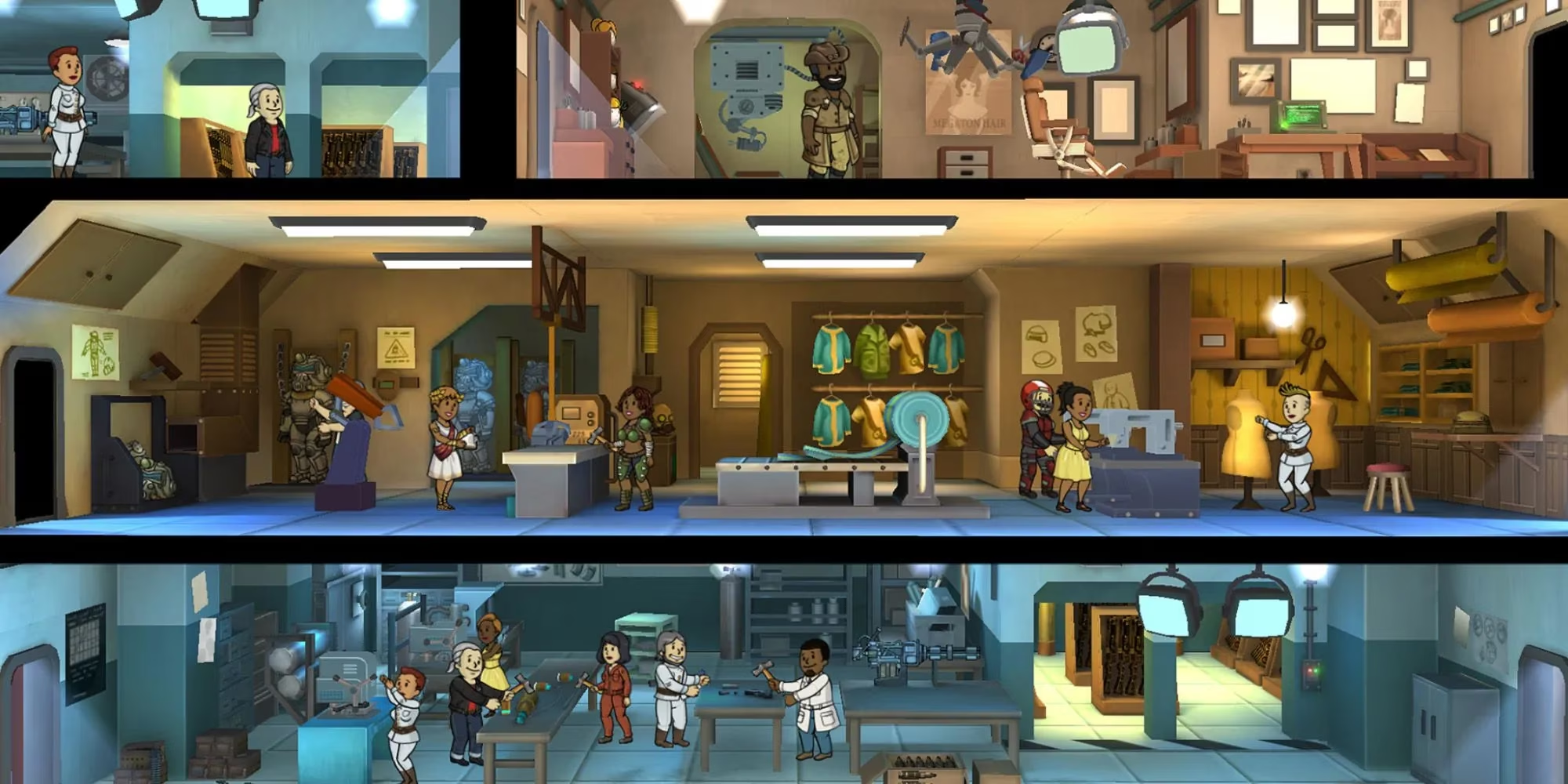
Take Fallout Shelter, a game that arrived like a stowaway on the ship of Fallout 4’s announcement. Rather than traversing a radioactive Boston, I found myself managing a vertical ant farm of vault dwellers, making life-or-death decisions through menu clicks instead of dialogue wheels. This was the vault not as a narrative backdrop, but as a living, breathing spreadsheet of human desperation—a design choice so sharp it felt like swapping a telescope for a microscope and suddenly seeing the individual cells of an ecosystem. It traded liberty for intimacy, and in doing so, reminded me that the series’ soul isn’t tied to its map size, but to its moral arithmetic. (And no, we don’t speak of Fallout: Brotherhood of Steel—that linear console experiment was a ghost the fanbase happily buried long before the Shelter revival.)
The same tightening occurs in the Witcher universe, where Thronebreaker: The Witcher Tales unfurled like a tapestry instead of a sprawling atlas. The Witcher 3 taught me to wander until my boots wore thin, but Thronebreaker bound me to Queen Meve’s grim march through a war-torn Lyria. I still moved across a map, but each step was a deliberate narrative heartbeat, not a question of “what’s over that hill?” This was a story that clung to me like a burr—impossible to shake off because it never let go long enough for me to get distracted by a random monster nest. The campaign stretched close to 30 hours, proving that value isn’t measured in square kilometers but in the weight of the choices I carried. It’s the difference between a river and a flood; one has a direction, the other just spreads.
Even the bedrock of the open-world RPG, The Elder Scrolls, played this card early with a spinoff that now reads like a prophecy. An Elder Scrolls Legend: Battlespire dumped me straight into a multilevel dungeon and said “survive.” No sun-drenched plains, no guild side quests—just a razor-thin focus on combat and plot inside a Daedric nightmare. Reviews at the time were as cold as the Void, but looking back from 2026, I see it as a dry run for the procedural dungeon dives that would later define parts of Fallout 4 and Fallout 76. It’s a reminder that cutting a world down doesn’t always shrink a game’s ambition; sometimes it distills it.
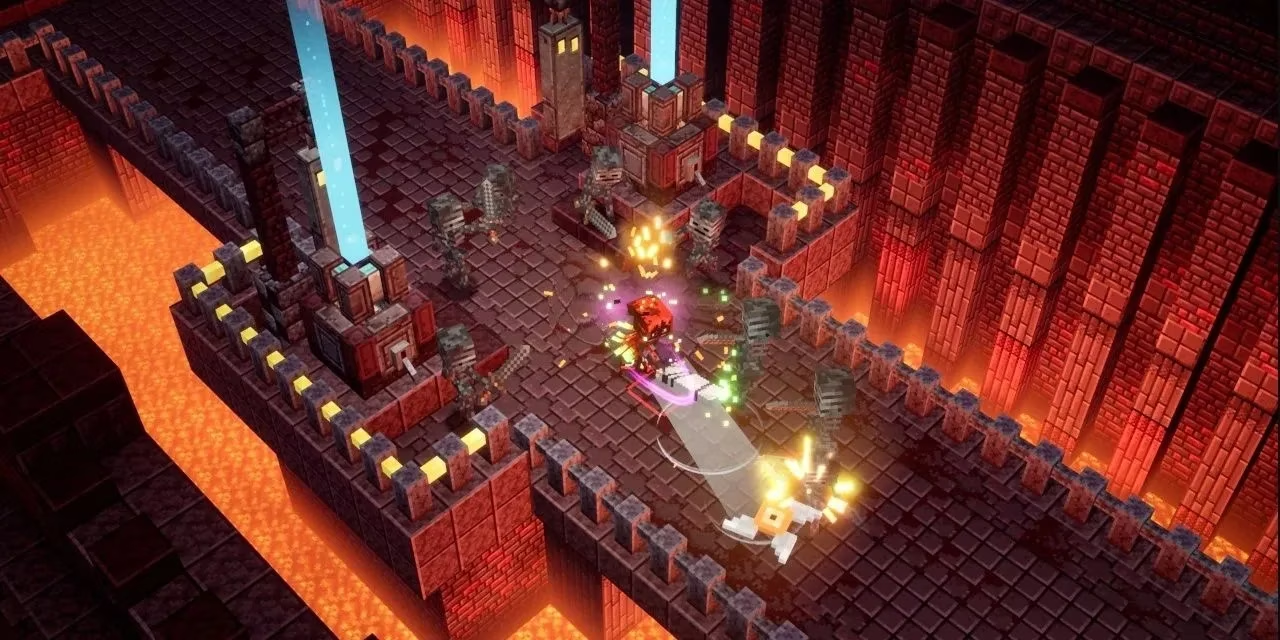
Maybe the most charming pivot comes from Minecraft Dungeons. If Minecraft itself is an infinite box of crayons, Dungeons is a single, beautiful coloring page. It guides me through levels with the same blocky soul but a clear path forward—a dungeon crawler so welcoming it could baptize a new generation into the genre without the grim poetry of Diablo. For a younger player in 2026, it’s the perfect bridge, and for me, it’s proof that linearity can be an act of generosity rather than restriction. Similarly, Final Fantasy 15: Pocket Edition performed surgical extraction on its parent’s open-world heart, retelling the royal road trip with a chibi scalpel. What remained was a joyful, linear story that fit in my pocket, unburdened by Regalia fuel stops and fetch quests. It feels like hearing a familiar symphony played on a music box—every essential note intact, nothing extra.
More recent examples continue the trend. Vampire: The Masquerade - Swansong abandoned the free-roaming shadows of Bloodlines for a three-character narrative crucible where my choices were the only map that mattered. It’s a compact inferno of political intrigue, proving that storytelling pressure creates diamonds. And Horizon Call of the Mountain on PSVR 2 traded Forbidden West’s expanse for a vertical, eight-hour climbing epic that made my palms sweat more than any open desert ever could. Scale doesn’t need a compass; sometimes it just needs a rope.
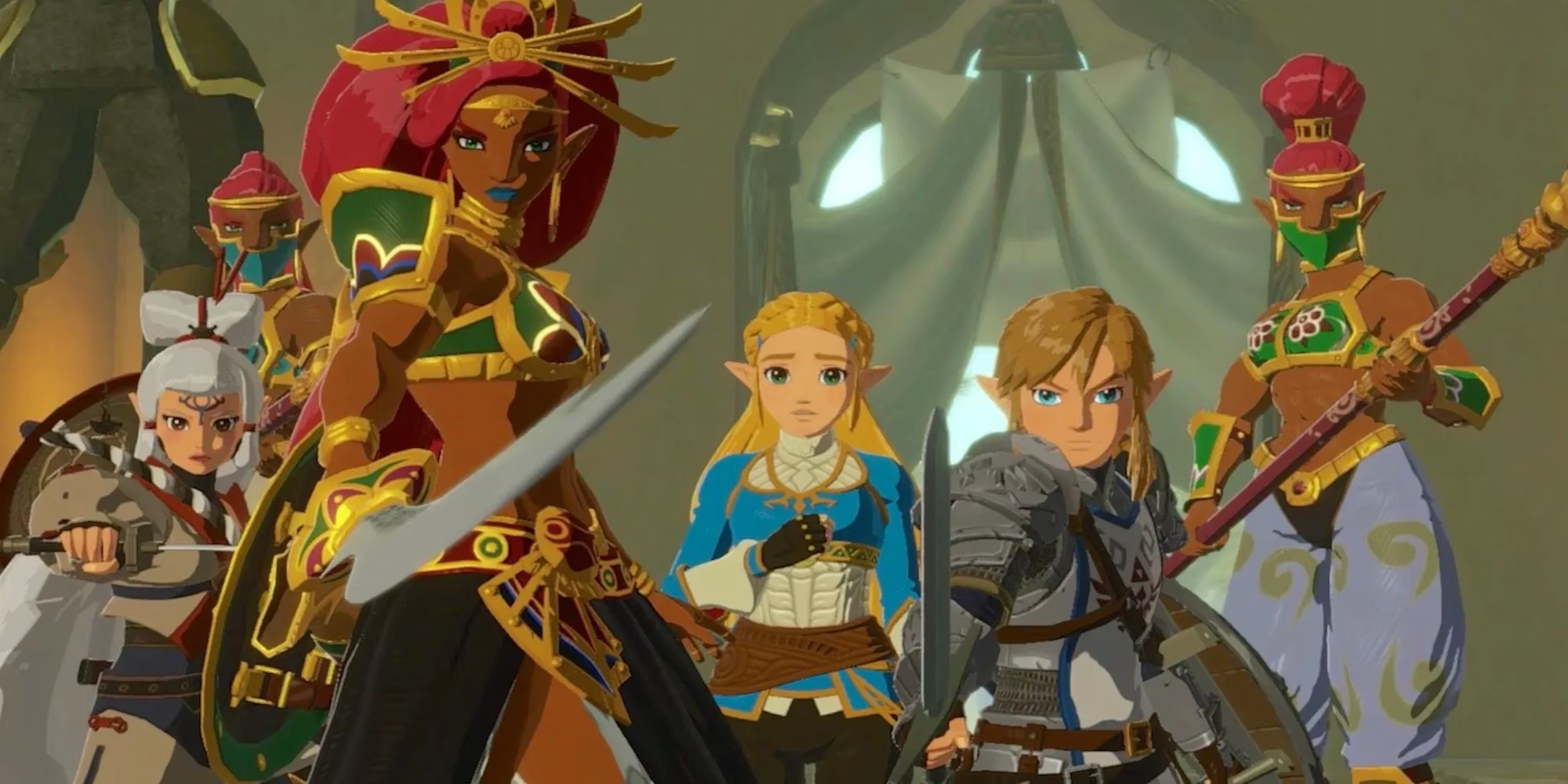
The most audacious pivot, however, belongs to Hyrule Warriors: Age of Calamity. After Breath of the Wild taught the entire industry how to breathe, this Musou spinoff strapped us back into linear battlefields with a thousand enemies to carve through. Yet by keeping the art and spirit of that celebrated Hyrule, it sidesteps the fatigue of its own genre. For me, it’s a lesson in how a franchise can build a cathedral and then, in another wing, construct a perfectly engineered firing range—both are sacred spaces, just dedicated to different prayers.
In 2026, as I look at the upcoming slate of games, I no longer see the linear spinoff as a downgrade. It’s a deliberate lens, a way for developers to say, “Let’s stop painting the horizon and instead study the wrinkles on our character’s hands.” The open-world blueprint isn’t going anywhere, but these smaller stories are the rest stops that make the journey meaningful. And sometimes, the best adventure isn’t the one where you can go anywhere, but the one where you must go forward.