The Ultimate Freedom: Open-World Games That Truly Let You Do Anything in 2026
Open-world games and freedom redefine gaming in 2026, with GTA 5, Elden Ring, and Skyrim offering immersive, limitless adventures.
In the vast digital playgrounds of 2026, most gamers would swear that open-world games are the epitome of freedom—but oh boy, how wrong they'd be! The genre has become so stuffed with copycats that some titles slap on an 'open world' label like a cheap sticker, only to lock players into rigid corridors of gameplay. It's like promising an all-you-can-eat buffet and then serving microwave dinners. Thankfully, a handful of legendary titles haven't forgotten the magic formula: give players a massive sandbox and watch them create their own stories. These aren't just games; they're digital realms where freedom isn't just a feature—it's the entire soul.
Grand Theft Auto 5: The City That Never Sleeps (Or Follows Rules)
Grand Theft Auto 5 might have its scripted Hollywood moments, but when you ditch the missions? Holy moly, Los Santos transforms into a lawless playground where chaos is the only rule. This sprawling landscape isn't just big; it's a living, breathing beast with more secrets than a politician's diary. Players can:
-
Rescue strangers in bizarre scenarios (because why not?)
-
Hunt for hypercars that scream 'look at me!' across highways
-
Uncover hidden Easter eggs that'll make you feel like a digital Indiana Jones
When GTA 5 lets its hair down, it's a technical marvel that still blows minds in 2026. The city feels alive—sometimes too alive, like that one NPC who just won't stop judging your driving.
Elden Ring: Where Every Bush Hides a Nightmare (Or Treasure)
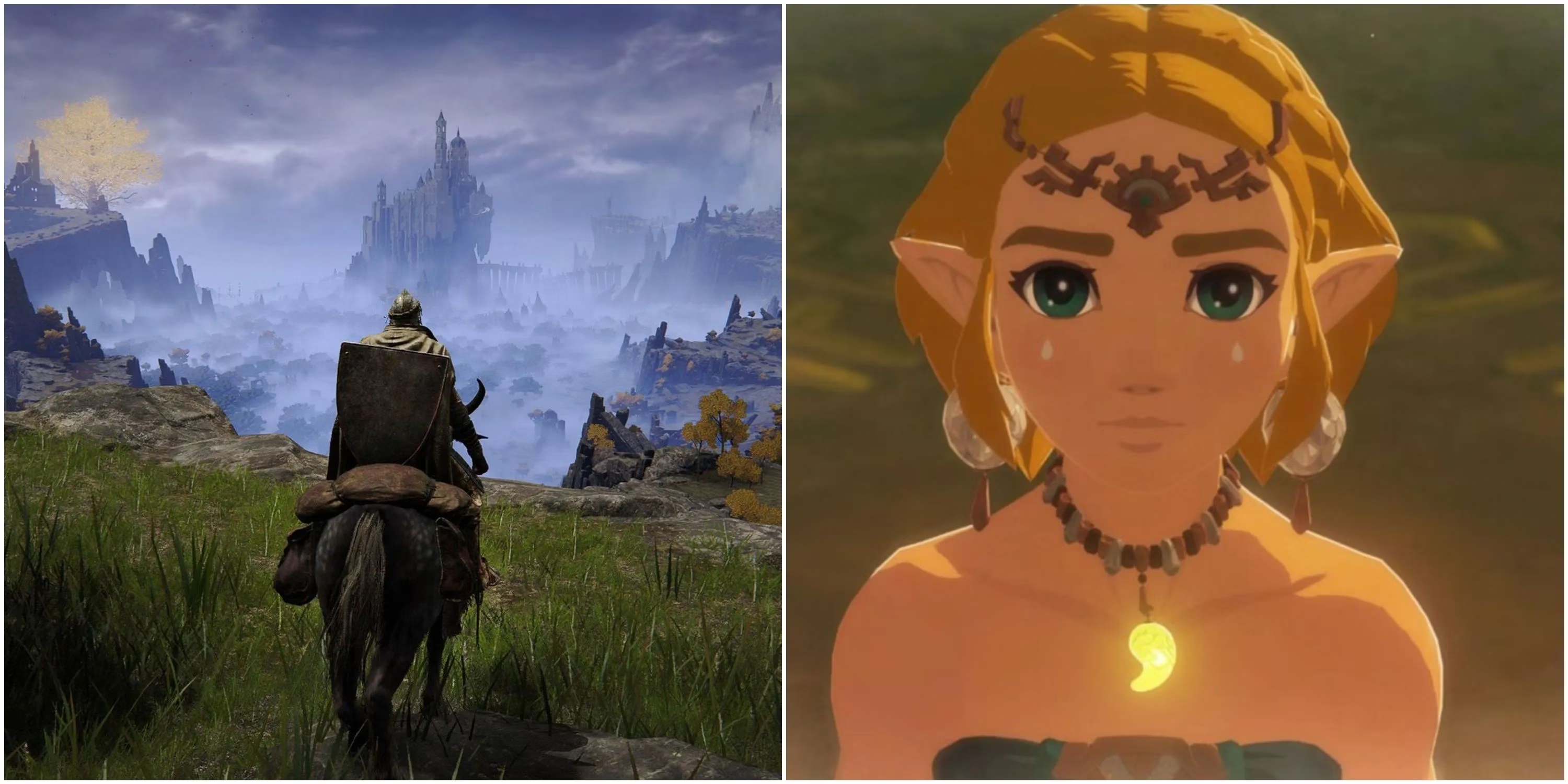
FromSoftware took their punishing formula and painted it across The Lands Between, creating a world so vast it makes other open worlds look like parking lots. Elden Ring doesn't just offer freedom; it throws you into a beautiful nightmare and says 'good luck!' The exploration here isn't just walking—it's a desperate scramble for survival and power. Every corner whispers secrets:
-
Hidden dungeons that'll test your sanity
-
Bosses so tough they'll have you questioning your life choices
-
Rune-rich treasures that make the pain worth it
It's like the game knows when you're frustrated and casually drops a new weapon path just to keep you hooked. The sense of discovery? Palpable enough to give you goosebumps.
Skyrim: The RPG That Refuses to Die
Over a decade later, and Skyrim still stands tall like a frost-covered giant. This game didn't just set the standard—it built the entire stadium. Starting as a weakling Dragonborn and growing into a world-shattering hero? That's the stuff legends are made of. The freedom here isn't just about going anywhere; it's about becoming anyone:
| Freedom Aspect | What It Means in 2026 |
|---|---|
| Build Variety | From stealth archers to punch-wizards, the options are endless |
| Exploration | Nordic ruins that still surprise veteran players |
| Roleplaying | Live as a bard, blacksmith, or professional cheese collector |
The world speaks for itself, and in 2026, modders have turned it into a canvas for unimaginable adventures.
No Man's Sky: The Cosmic Redemption Story
Remember when this launched? Oof. But fast forward to 2026, and No Man's Sky is the poster child for gaming comebacks. This isn't just an open world—it's an open universe where procedural generation creates wonders that feel handcrafted. The freedom here is... well, astronomical:
-
Ignore the main quest (seriously, the game won't judge)
-
Build bases on alien worlds with creatures that look like they escaped a psychedelic dream
-
Explore until your spaceship fuel runs out (and then explore some more)
It's the ultimate chill-out game where the only limit is your imagination—and maybe your patience for gathering resources.
The Legend of Zelda: Tears of the Kingdom - Verticality Is King
Breath of the Wild was freedom incarnate, but Tears of the Kingdom said 'hold my elixir' and added sky islands and depths that make the world feel like a layered cake of adventure. The vertical exploration isn't just a gimmick; it's a revolution. This game embraces immersive sim principles so well that players have solved puzzles in ways that probably made the developers facepalm (in a good way). Key freedom elements:
-
🏔️ Sky Islands that require creative thinking to reach
-
⛏️ The Depths offering eerie underground exploration
-
🔧 Ultrahand abilities letting you build anything from bridges to war machines
It's the sequel that didn't just match expectations—it soared above them, literally.
Caves of Qud & Kenshi: The Brutal Freedom Twins
These two games don't just offer freedom; they throw you into deep ends of different oceans and laugh while you struggle. Caves of Qud is a roguelike where every playthrough generates a new world—perfect for masochists who enjoy genetic mutations and existential dread. Meanwhile, Kenshi drops you into a post-apocalyptic wasteland with zero instructions and says 'figure it out, champ.'
What makes them special in 2026?
-
Caves of Qud: After the brutal learning curve, you can become anything from a psychic farmer to a cyborg merchant
-
Kenshi: Build a empire, become a slave, or just wander as a nomadic pack rat—the world reacts to your choices
Both games treat players like adults who don't need hand-holding, which is both terrifying and liberating.
Minecraft: The Freedom Pioneer That Still Reigns
No discussion about open-world freedom is complete without bowing to the blocky king. Minecraft in 2026 isn't just a game; it's a digital universe where creativity is the only currency. The freedom here is so absolute that players have reconstructed entire fictional worlds block by block. Whether you're:
-
Surviving monster-filled nights (or turning them off because you're not in the mood)
-
Building castles that would make medieval architects weep
-
Exploring infinite worlds that still manage to surprise
Minecraft understands that true freedom means letting players write their own rules—then break them to build something better.
The Verdict: Freedom Isn't Free (But It's Worth It)
In 2026, these games prove that open-world freedom isn't about map size or checkbox activities. It's about creating spaces where players feel truly unleashed—where every hill might hide a dragon, every city alley might spark a new story, and every failure feels like your own beautiful mess. They whisper the same promise: 'This is your world. Break it, build it, breathe it.' And honestly? That's the kind of freedom worth getting lost in for another decade.