Minecraft's Neglected Sheep: The Overworld's Unsung Hero Deserves a Glow-Up
Explore the surprising Minecraft 2025 Spring to Life update, where sheep, the game's most valuable passive mob, were overlooked despite their unparalleled utility, leaving players disappointed.
In the ever-evolving tapestry of Minecraft's Overworld, the Spring to Life update of 2025 was a vibrant brushstroke, bringing biome-specific textures to passive mobs and lush details to the environment. Chickens, cows, and pigs were transformed, their digital hides and feathers now reflecting the climates they inhabit, from the shaggy coats of taiga cattle to the sleek hides of savanna swine. Yet, amidst this renaissance of pixelated fauna, one cornerstone of the pastoral landscape was conspicuously left in its original, blocky state: the sheep. While other farm animals received a visual feast, sheep were handed only a minor palette adjustment for their wool spawning, a change as underwhelming as finding coal when you've been strip-mining for diamonds. This oversight, given the sheep's unparalleled utility, has become a point of contention within the community as the game moves into 2026.
Every Farm Animal Was Updated, Except the Sheep
The Spring to Life update was a veritable fashion show for Minecraft's livestock. Pigs, chickens, and cows strutted onto the biome stage with new textures inspired by real-world breeds. The cold biome cow, reminiscent of Scotland's shaggy Highland Cattle, and the warm biome pig, akin to Africa's reddish Red River Hog, added a layer of authenticity and visual distinction to exploration. This made every new world feel more unique, a world where the fauna itself told a story of its environment.
-
Cows: Now feature thicker fur in cold biomes (Snowy Plains, Taiga) and sleeker coats in warm ones (Jungle, Savanna).
-
Pigs: Exhibit different skin tones and features based on climate.
-
Chickens: Received varied plumage patterns.
Sheep, however, were the wallflowers at this party. Instead of a model or texture overhaul, they were simply given a tweak to their default wool color spawning rates. White sheep became more common in temperate zones, brown in warm areas, and black in cold ones. This token gesture, while slightly practical for gathering brown wool, lacked the imagination and depth afforded to other mobs. The chosen colors were neither rare nor exciting, leaving sheep looking as generic as a default skin in a server full of custom capes.
Sheep: The Overworld's MVP (Most Valuable Passive Mob)
Sheep are not merely decorative; they are economic powerhouses, especially in the critical early game. They are a dual-purpose resource node, providing both Mutton for sustenance and Wool for building and crafting. In terms of sheer utility, they outclass their barnyard companions.
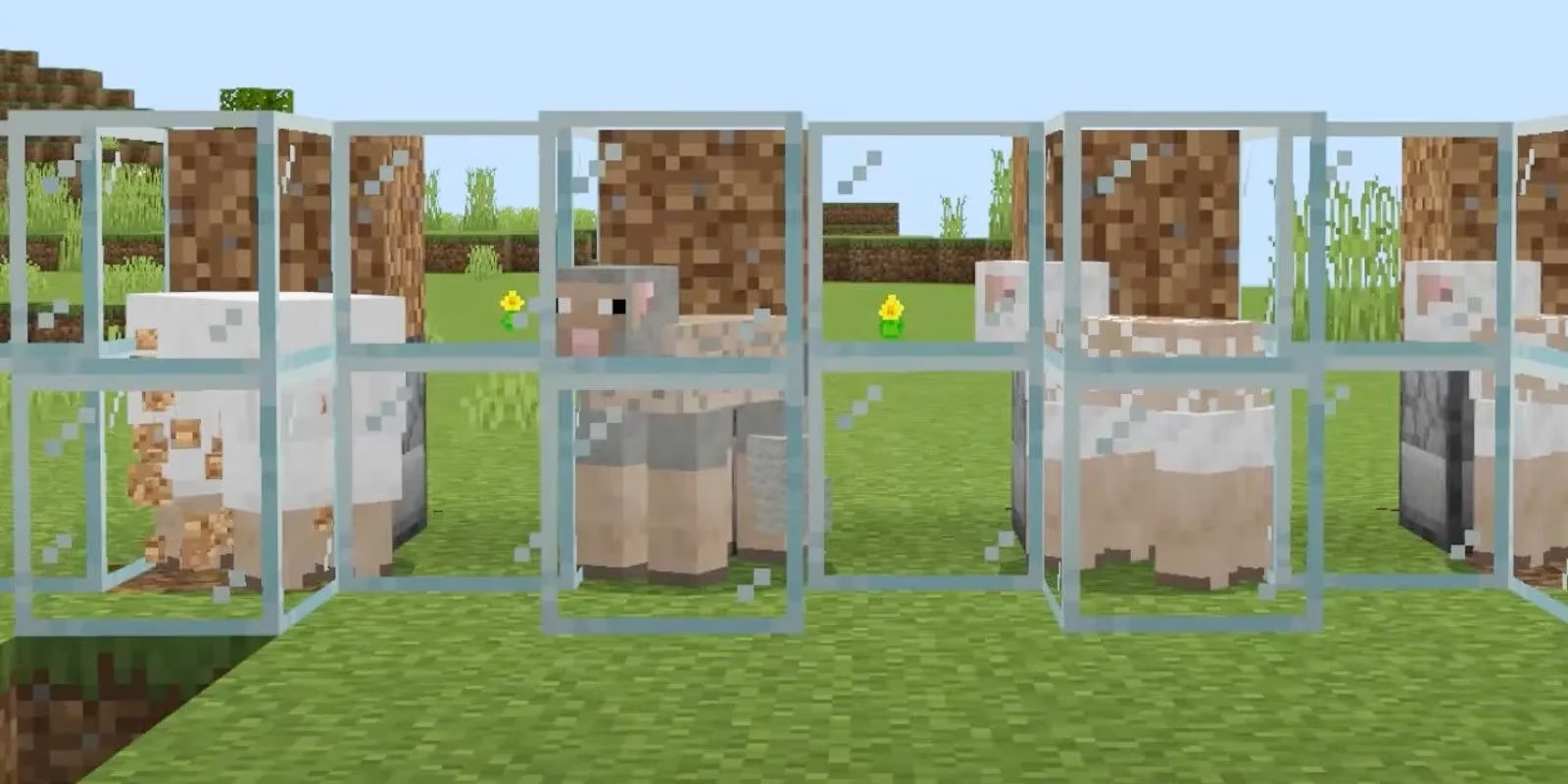
Consider the data:
| Mob | Primary Resources | Utility for Building |
|---|---|---|
| Sheep 🐑 | Wool, Mutton | Provides 16 colored wool blocks directly. |
| Cow 🐄 | Leather, Beef, Milk | Leather for armor; milk for curing status effects. |
| Pig 🐖 | Porkchops | Food source only. |
| Chicken 🐔 | Eggs, Feathers, Chicken | Eggs for baking; feathers for arrows. |
Sheep are the most economical source of colorful building blocks in the game. While blocks like Terracotta require significant resource investment (clay mining and dye crafting), sheep offer a renewable, breeding-based system. With just the four primary dyes, players can breed a rainbow of sheep, generating cyan, lime, magenta, and more. This makes them the unsung architects of the Overworld, their utility as foundational as redstone dust is to complex machinery. Simply put, neglecting the sheep in a visual update is like polishing the handle of a diamond pickaxe but leaving the business end dull.
A Long-Overdue Overhaul for a Pixelated Icon
The neglect of sheep is particularly glaring given their daily interaction rate with players. While mobs like squids or silverfish might also be overdue for a refresh, they don't share the sheep's ubiquitous presence in core gameplay loops—survival, building, and farming. With every other common farm animal now visually enriched, giving sheep a similar treatment is not just a request; it's an obvious next step.

Proposed Biome-Specific Sheep Variants:
Just as the new cow textures draw from real life, sheep could be reimagined with breed-inspired models:
-
Cold Biomes (e.g., Snowy Plains, Ice Spikes):
-
Valais Blacknose Sheep: An adorable breed with distinctive black facial features, perfect for adding character.
-
Dorset Horn Sheep: A breed with prominent, curling horns, offering a more rugged and visually striking variant.
-
-
Warm Biomes (e.g., Savanna, Badlands):
-
Gulf Coast Native Sheep: A hardy, heat-tolerant breed. While visually similar to the base model, its texture could reflect a thinner wool coat.
-
Damara Sheep: A breed known for its fat-tailed silhouette, which could introduce a unique and memorable model shape.
-
Beyond Textures: Expanding the Wool Palette
A texture update is only half the story. The other critical frontier is the wool color palette itself. Minecraft has not introduced a new dye color since 2011. In a 2026 landscape filled with intricate blocks like glazed terracotta and countless decorative possibilities, the 16-color wool spectrum feels increasingly limited.
-
New Dye Sources: Introducing new flowers, plants, or minerals found in later updates (like the lush caves or deep dark) could yield new dye colors.
-
Dye Mixing Expansion: The existing dye crafting system could be expanded to create intermediate shades. For example, mixing red dye with bone meal could create a pastel pink, different from the bright pink already available.
This expansion would not only reward exploration but also empower builders with a finer granularity of color, making sheep an even more central and engaging part of the creative process. Without such updates, the sheep remains a relic in a modernizing world, its potential as vast and untapped as the seed of a freshly generated world. As Minecraft continues to grow, giving its most utilitarian mob the attention it deserves is the final, missing piece to a truly living, breathing Overworld.