Minecraft Legends Army Guide: Mobs, Banners, and Flames in 2026
Minecraft Legends mob types guide: command golems, zombies, skeletons, and creepers to build a piglin-punting army.
In 2026, Minecraft Legends still asks a delightfully simple question: does a commander want to be a lone builder with a pickaxe and a dream, or a battlefield maestro with a mob squad that makes the piglins wish they had stayed in the Nether? The answer, obviously, is the second one. A clever commander does not win by swinging harder; they win by knowing which mobs to bring, how many bodies to rally, and when to invest in the upgrades that turn a rowdy crowd into a proper army. The game hands players a tidy loop of gathering, crafting, and commanding, and the fun really kicks in when that loop becomes a full-blown piglin-punting machine.
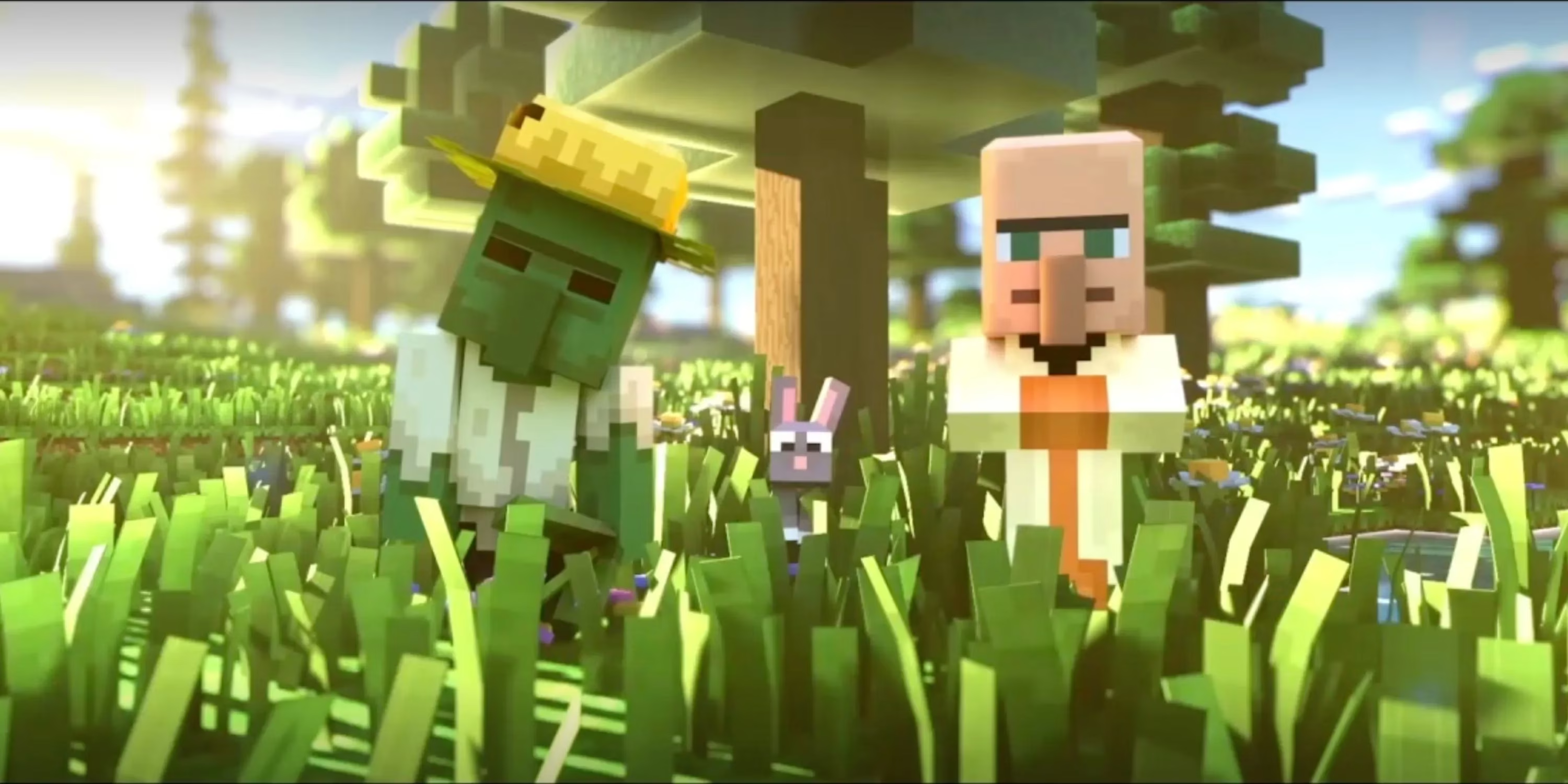
The Magnificent Seven: Mob Types and How to Get Them
Minecraft Legends serves up seven mob types, and each one has its own job, price tag, and personality. The first two are the starter besties: Plank Golems and Cobblestone Golems. Plank Golems pepper nearby enemies with arrow barrages, while Cobblestone Golems are the wrecking crew that smashes structures with gleeful abandon. They are not fancy, but they get the job done without much fuss.
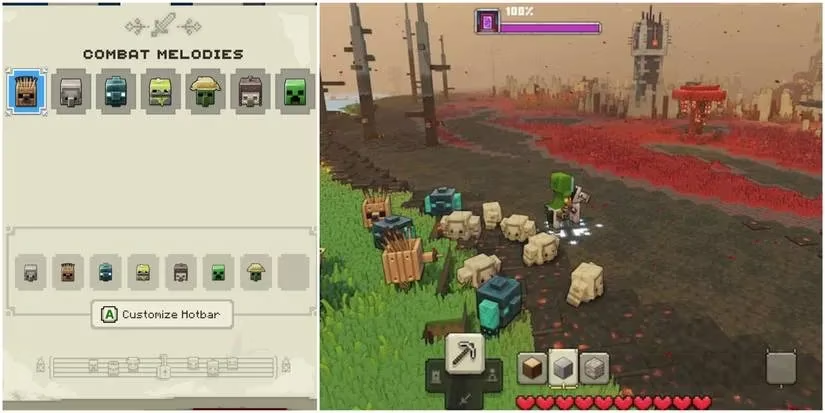
Once iron enters the picture, the roster opens up. Grindstone Golems are the scrappy duelists, especially useful when enemy ranged troops start acting cocky. Mossy Golems are the team medics and cleanup crew, healing injured allies and clearing debuffs so the rest of the army can keep swinging. A commander who ignores support mobs is basically trying to win a food fight with both hands tied behind their back.
The final three mobs come from the village buddy system. Zombies, Skeletons, and Creepers each need a relationship built with their respective village, and defending those villages from piglin attacks is the key. After that, Zombies spawn with redstone, Skeletons with diamond, and Creepers with coal. Zombies are physical-damage specialists, Skeletons are glass cannons who fire long-range arrows, and Creepers are walking demolition charges that deal high damage to structures. In short: Zombies punch, Skeletons snipe, and Creepers turn buildings into confetti.
| Mob | Best Role | Spawn Resource | Unlock Method |
|---|---|---|---|
| Plank Golem | Close-range arrow barrage | Starter mob | Available from the start |
| Cobblestone Golem | Structure smasher | Starter mob | Available from the start |
| Grindstone Golem | Combat, especially versus ranged troops | Iron-era unlock | Unlock iron |
| Mossy Golem | Healing and debuff removal | Iron-era unlock | Unlock iron |
| Zombie | Physical damage | Redstone | Defend its village |
| Skeleton | Long-range arrows | Diamond | Defend its village |
| Creeper | Structure damage | Coal | Defend its village |
Banner Improvements: More Bodies, More Chaos
As the campaign rolls on, the piglins stop playing nice and start bringing bigger, meaner hordes. A commander can have all the mob variety in the world, but variety alone will not save a small army from a large problem. That is where banner improvements come in.
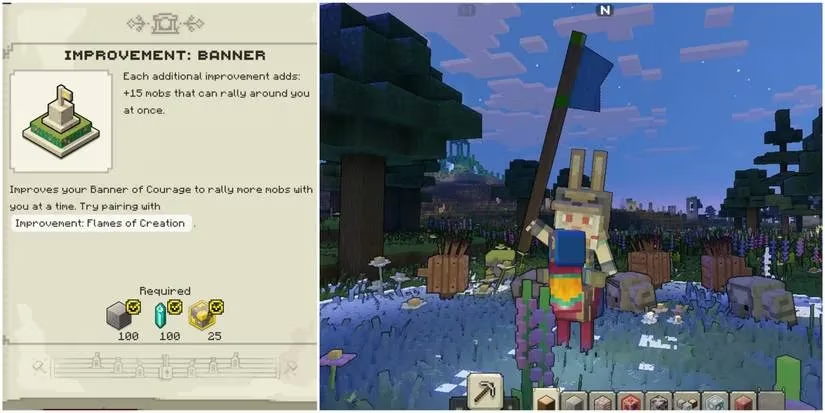
Each banner improvement increases the number of mobs a commander can rally by +15. Building one costs 100 stone, 100 prismarine, and 25 gold. That is a reasonable price for a bigger crew, especially when the alternative is herding cats into a piglin meat grinder.
There is a catch, and it is a big one: banner improvements do not increase the number of mobs a commander can spawn. They only increase how many can be rallied around the banner. So if the spawn capacity is 20 and banner improvements allow 35 rallied mobs, the commander can spawn 20 and then scoop up 15 extra villagers, wolves, or other free-roaming mobs from around the world. It is a classic case of bringing the whole nine yards and then borrowing a few more yards from the neighbors.
Flames of Creation: The Spawn-Cap Solution
The other lever for army growth is the Flames of Creation. These improvements directly increase spawn capacity, which means more mobs can be created and brought into the fight. The standard Flames of Creation improvement adds +4 spawn capacity and costs 200 stone, 200 prismarine, and 25 gold. The Large Flames of Creation improvement adds +10 spawn capacity and costs 400 stone, 400 prismarine, and 100 gold.
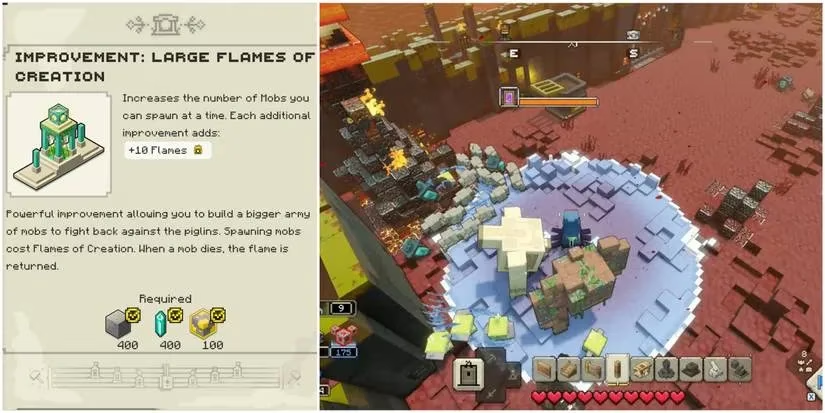
Those resource numbers are no joke. A commander should not expect to slap down the large upgrade on day one unless they have been hoarding like a dragon with a spreadsheet. The smart move is to upgrade Allay Storage first so it can hold at least 400 prismarine and 100 gold. After that, the resource grind becomes a matter of patience, map knowledge, and a healthy appetite for shiny rocks.
The 2026 Playbook: Build Wide, Rally Smart, Hit Hard
Even in 2026, the core recipe remains sharp as a tack: unlock the mobs that fit the plan, improve the banner to rally more bodies, and improve the Flames of Creation to spawn a larger force. A balanced army might pair Cobblestone Golems for structure pressure, Grindstone Golems for duels, Mossy Golems for support, and Creepers for demolition. A cheekier composition might lean on Skeletons for ranged chip damage while Zombies soak attention and Plank Golems add arrow pressure.
The golden rule is simple: do not bring a knife to a gunfight, and do not bring a tiny army to a piglin party. A commander who mixes mob roles, respects the spawn cap, and remembers that banner rallies and Flames of Creation solve different problems will have a much easier time turning piglin hordes into yesterday's bacon. With a little planning and a lot of stone, prismarine, and gold, the battlefield becomes less of a desperate scramble and more of a well-oiled, slightly chaotic, extremely satisfying mob parade. 🐷⚔️