Five Game-Changing Mechanics That Built Open-Worlds as We Know Them
Open-world game mechanics like minimaps and crafting benches evolved through innovation, shaping immersive virtual adventures.
As I boot up yet another sprawling open-world title in 2026, I’m struck by how familiar everything feels. The minimap in the corner, the crafting bench just over there, the radio tower glinting on the horizon—these are the unsung heroes that hold our virtual adventures together. Yet every single one of these mechanics has a story, a moment when some brave developer threw caution to the wind and said, “Let’s try something nuts.” Open worlds didn’t just plop into existence fully formed. They were stitched together, piece by daring piece, over decades. Today I want to take you behind the curtain—not as a critic, but as a fellow gamer who’s spent way too many hours lost in these digital playgrounds. Grab a coffee, settle in, and let’s trace the DNA of five mechanics that changed everything.
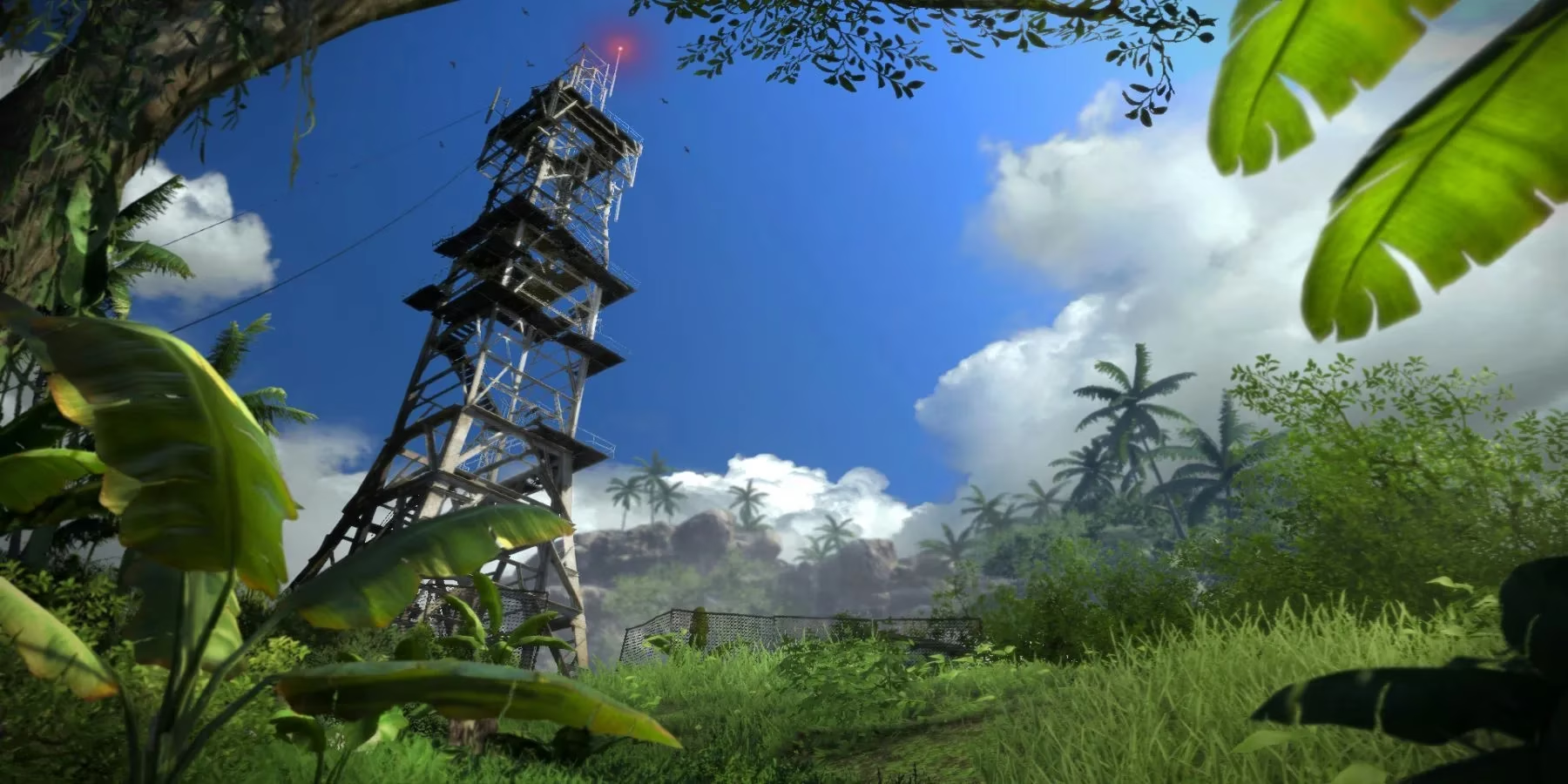
I still remember my first “Ubisoft Tower.” The year was 2012, and I was standing at the foot of a rusty radio mast in Far Cry 3, looking up and thinking, “Really? Another one?” But you know what? I climbed it anyway. There’s something oddly hypnotic about that loop—scaling a precarious structure, hitting the top, and watching a whole chunk of map unfurl like a fresh tablecloth. Ubisoft didn’t invent the idea of vertical vantage points, but they sure perfected it. The very first Assassin’s Creed dangled the promise of synchronization viewpoints across sprawling cities, and suddenly, marking points of interest became a ritual. Over the years, the humble tower turned into a genre staple, and honestly, a meme. I’ve groaned, I’ve rolled my eyes, but I won’t lie: I’ve also felt a little flicker of satisfaction every time the world gets a bit smaller. And then Breath of the Wild came along and whispered, “What if the tower was the map?” No markers, just sheer cliffside visibility and the player’s own curiosity. It was a masterclass in rethinking the formula—proof that even the most overused mechanic can be reborn.
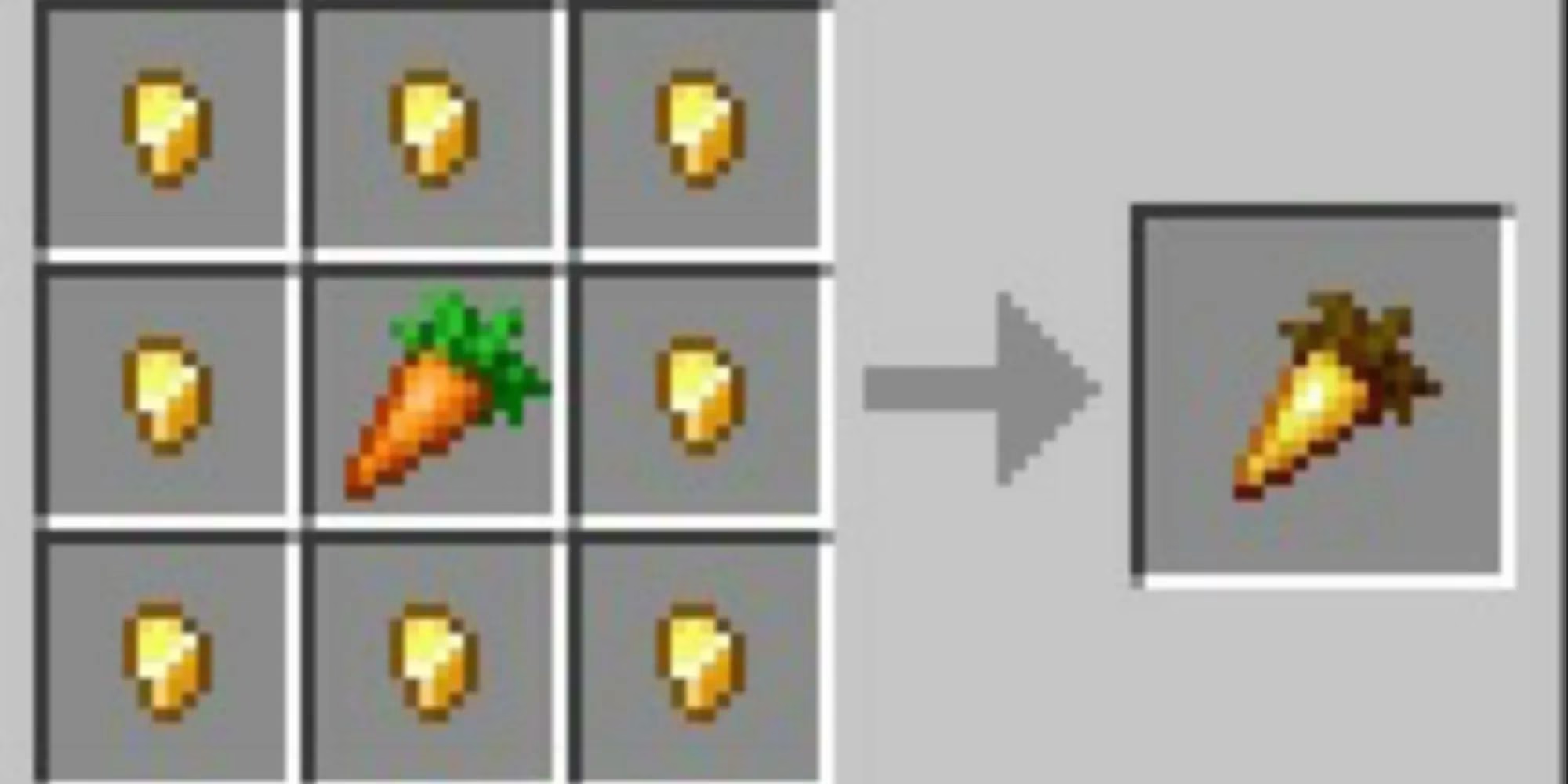
Let’s talk about the quiet revolution that started with a blocky little game about punching trees. Minecraft didn’t just give us a reason to hoard dirt; it basically wrote the rulebook for modern crafting. Before you could duct-tape a scope to your rifle in Fallout 4 or cook up elixirs in The Witcher 3, there was a Creeper hissing behind your back while you tried to arrange sticks on a grid. Crafting in open-world games is like a Swiss Army knife—sometimes you just need to whip out a new gadget to keep the adventure rolling. At its best, it’s a glue that holds the loot loop together, turning trash into treasure. I can’t count the times I’ve scoured a post-apocalyptic junkyard, pockets bulging with old screws and duct tape, grinning like a maniac because I knew I could turn that junk into a settlement’s worth of turrets. But I’ve also stared at a crafting menu so convoluted that I just… didn’t bother. When a mechanic feels like optional homework, it sours the whole experience. The secret, I think, is making it feel essential without being a chore. And that’s a tightrope walk that Minecraft nailed in its sleep.
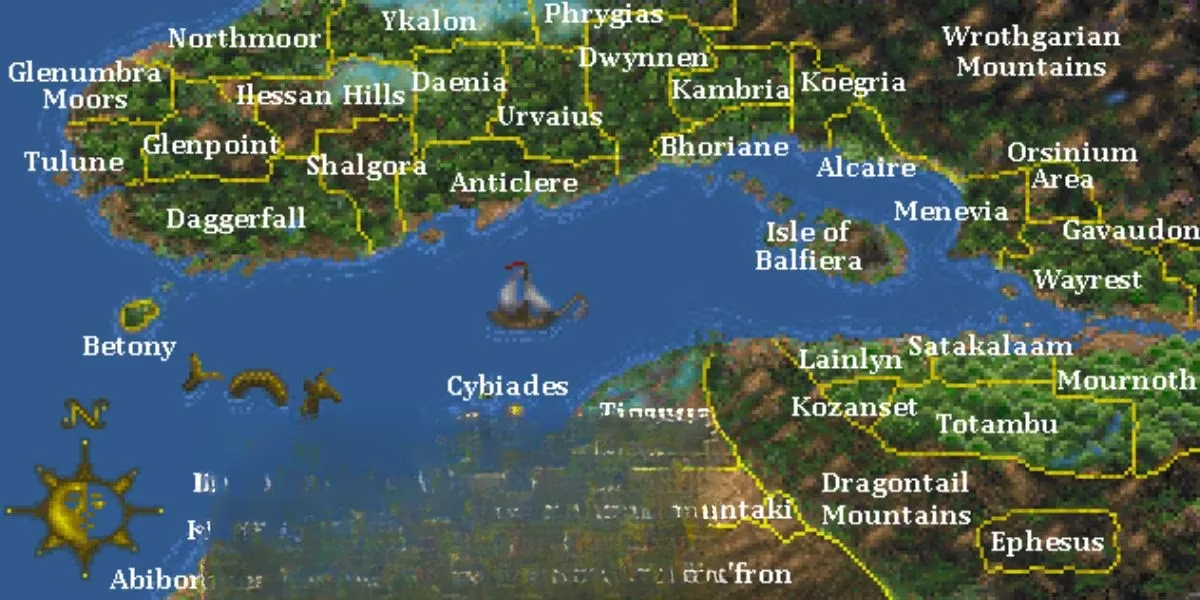
Now, raise your hand if you’ve ever fast-traveled straight past a dragon just to save five minutes. Guilty as charged. Fast travel is the invisible safety net of open worlds, but its origins are anything but gentle. The Elder Scrolls II: Daggerfall plopped players into a map the size of real-life England and basically said, “Good luck.” Walking everywhere would have been madness. So Bethesda gave us a menu—click a spot, pick a travel option, and maybe get ambushed by a pack of wolves along the way. Real danger, real consequence, even in the shortcut. Compare that to today’s blink-and-you’re-there loading screens, and you realize how much we’ve traded immersion for convenience. Before Daggerfall, Dragon Quest III had the “Zoom” spell, letting you warp to towns you’d already visited. But Daggerfall was the first to say, “Let’s just make this a system, not a spellbook perk.” It was pure user-friendliness, and it stuck. Now we can’t imagine an open world without it—even if we occasionally feel a twinge of guilt for bypassing a breathtaking sunset at 300 miles per hour.
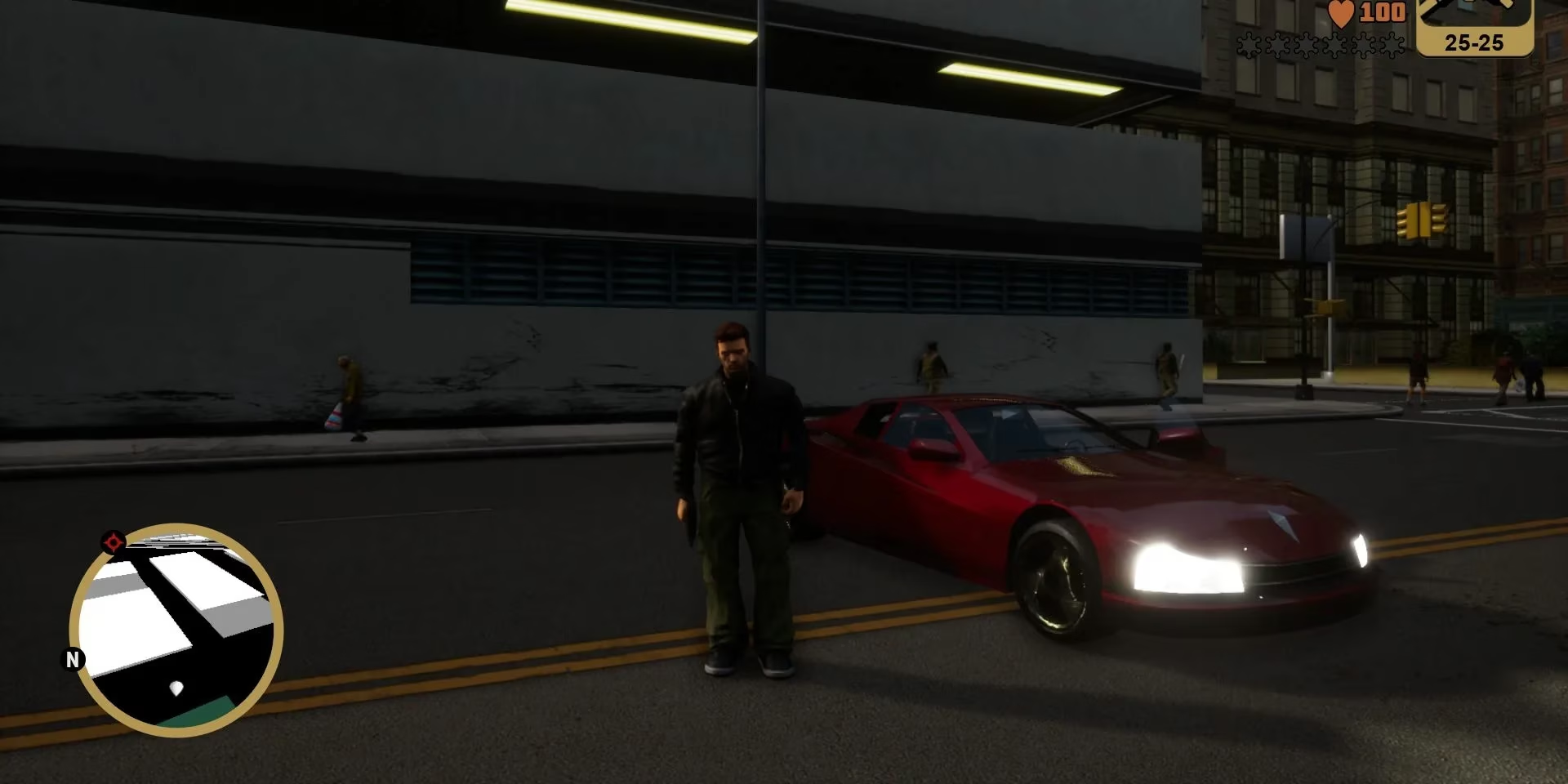
I’ll confess something: I have a love-hate relationship with the minimap. On one hand, it’s kept me from driving off a bridge in Grand Theft Auto 3 more times than I can count. On the other, I’ve caught myself staring at that tiny corner of the screen instead of the neon-drenched streets I’m supposedly exploring. GTA3 popularized the GPS-style minimap that we now take for granted, turning Liberty City’s chaos into a manageable dot-to-dot puzzle. The idea spread like wildfire. Even in a medieval fantasy like The Witcher 3, Geralt has—somehow—a perfectly accurate top-down view of his surroundings. I’ve chuckled at the absurdity, but I’ve also tapped that map like it owes me money. Some games try to soften the blow. Skyrim and The Outer Worlds use a compass bar, nudging you to keep your eyes on the horizon instead of glued to a corner. It’s the same core concept, just dressed differently. The real question is: does the minimap free us, or does it hold us hostage? I think the answer depends on the day, and maybe on how long I’ve been playing without blinking.
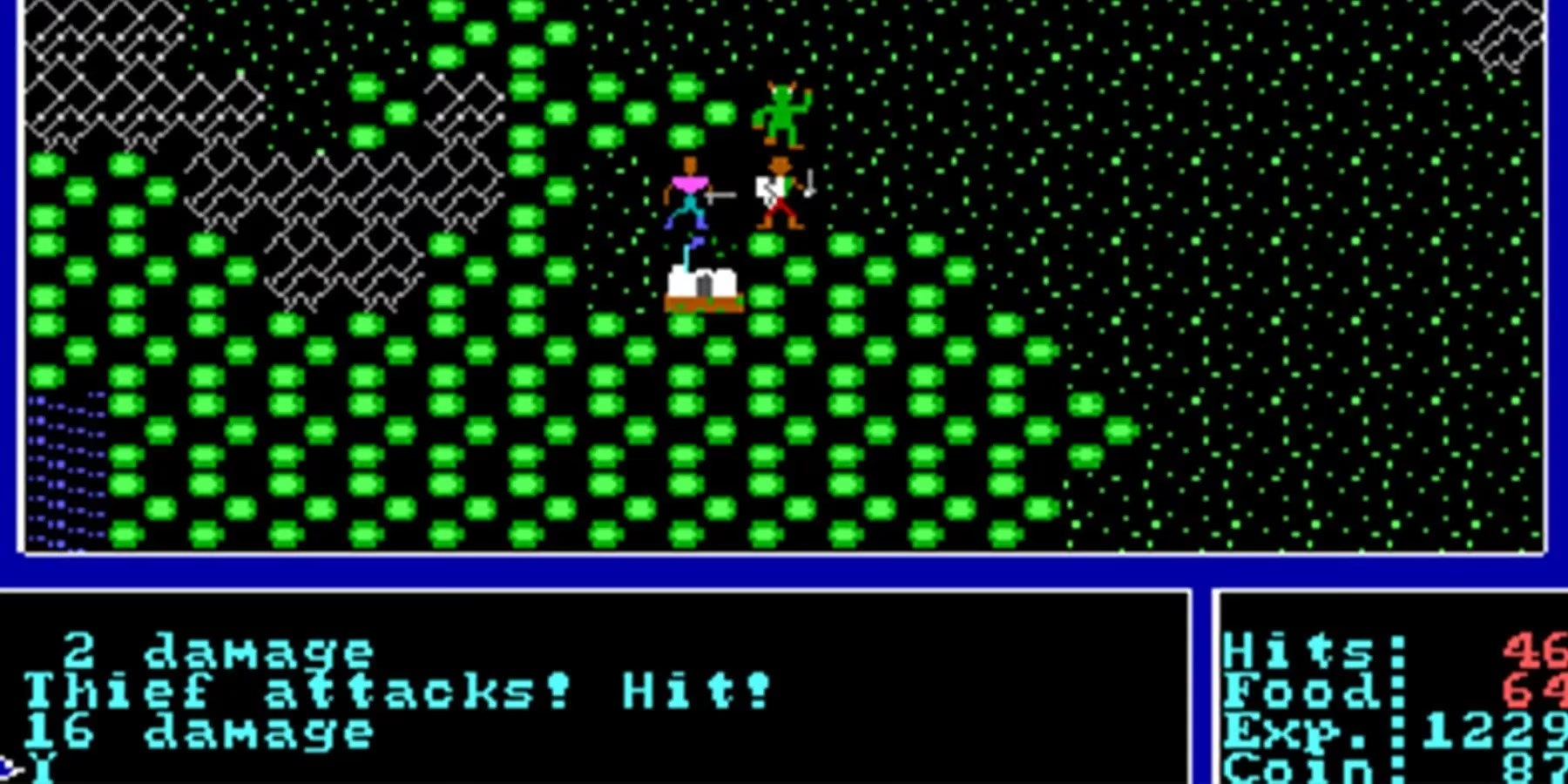
Finally, let’s give some props to the granddaddy of them all. Long before Skyrim’s perk constellations or Diablo’s loot cascades, there was Ultima. Richard Garriott, barely out of his teens, sat down to bottle the magic of Dungeons & Dragons and Lord of the Rings into a digital world. The result wasn’t just an RPG—it was the seed of every open-world progression system we know today. Stats, gear upgrades, character growth, even a day-night cycle that NPCs actually followed… Ultima did it first. I get a little shiver thinking about how those early innovations rippled through time, shaping everything from the skill trees I agonize over in Cyberpunk 2078 to the time-sensitive quests I’ve missed because an innkeeper had the audacity to go to bed. Modern open-world games stand on the shoulders of that pixelated pioneer, and yet so few players realize it. Next time you grind for a legendary sword or debate which perk to pick, spare a nod to Lord British and his world-changing vision.
So there you have it—five mechanics that quietly shaped the open worlds we lose ourselves in today. From the stubborn ubiquity of the tower to the quiet dignity of a well-placed fast travel menu, these systems are the bones beneath the beautiful landscapes. They’re not always perfect, and yeah, sometimes they drive me up the wall. But without them, our favorite digital frontiers would feel a whole lot emptier. Here’s to the devs who took the first leap, and to the gamers who keep climbing, crafting, and plotting their next waypoint. Now if you’ll excuse me, there’s a tower in the distance calling my name. I just can’t help myself.