Beyond Restlessness: How Specific Video Games Become Powerful Allies for Players With ADHD
Seven games for ADHD, from Minecraft to Counter-Strike, turn ADHD-friendly mechanics into genuine cognitive relief.
In the landscape of modern mental health awareness, attention-deficit/hyperactivity disorder has finally shed much of its historical stigma. No longer dismissed as simple fidgeting or a lack of discipline, ADHD is now widely understood as a complex neurodivergent condition that shapes how millions of children, teens, and adults experience focus, reward, and motivation. For many individuals, managing daily life with ADHD involves crafting environments that accommodate their unique cognitive rhythms—and increasingly, the world of interactive entertainment has emerged as an unexpected sanctuary.
Gaming has received growing recognition as a form of informal therapy for those navigating ADHD, not because it distracts from the condition, but because certain games align beautifully with how ADHD brains actually work. Whether through open-ended creativity, rapid feedback loops, or the freedom to switch tasks at will, these digital spaces can offer genuine cognitive relief. What follows is a story of seven such experiences—each one beloved by players, and each one uniquely suited to the way neurodivergent minds engage with the world.
Minecraft: Building a World Where Focus Finds Its Own Shape
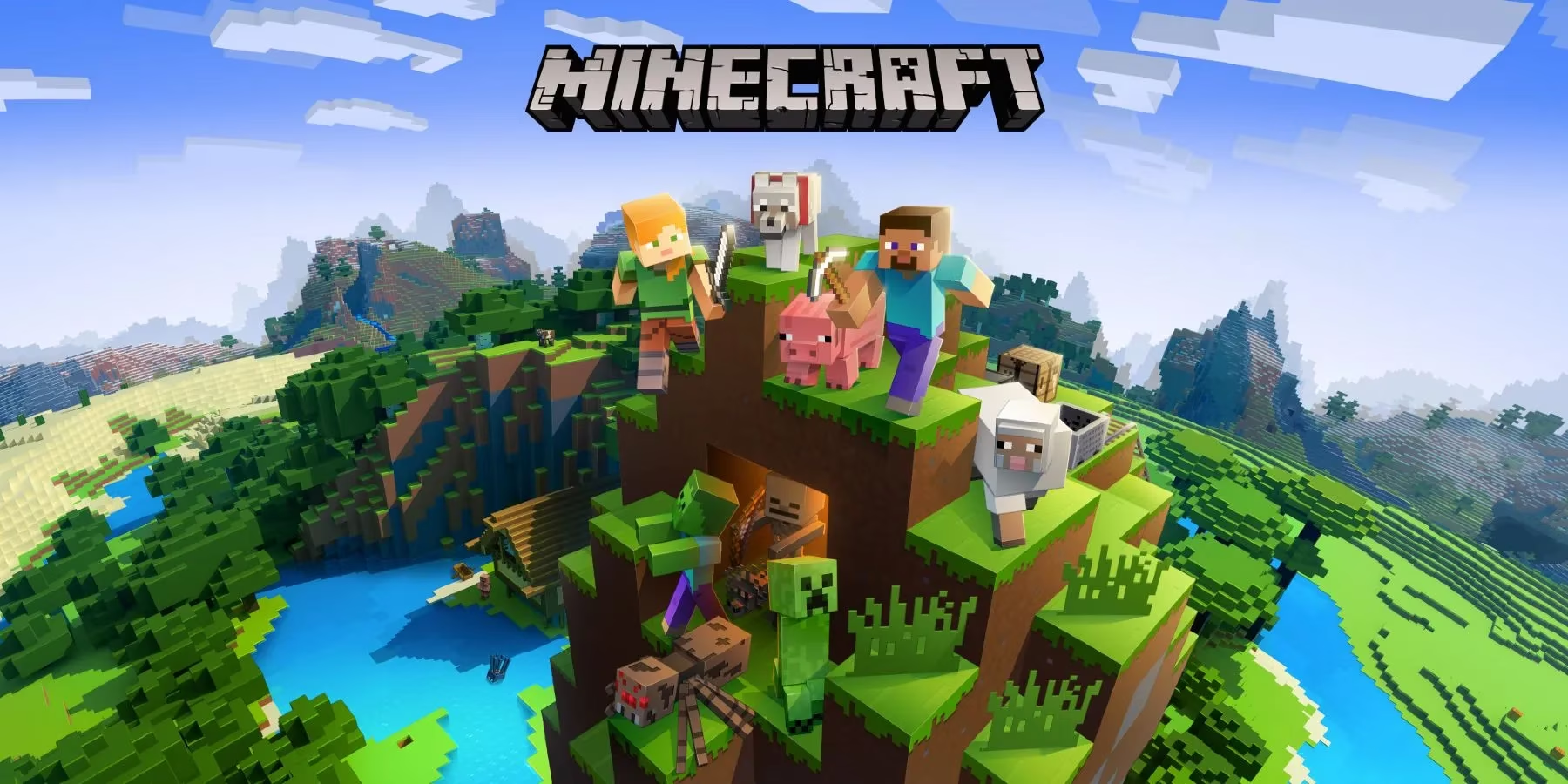
The first stop on this journey is Minecraft, a game that has become nothing short of a cultural phenomenon. For someone living with ADHD, the magic of Minecraft lies in its constant availability of purpose. There is always something to do—whether it's tending crops, hunting creatures, constructing elaborate architectural visions, or simply wandering across procedurally generated landscapes in search of the next horizon.
Unlike traditional games that demand sustained attention on a single linear path, Minecraft hands the player a blank canvas and says: create your own story. This freedom to exercise creative muscles at virtually every level becomes a form of investment that never feels forced. The game also lends itself beautifully to modding, meaning the experience can be reshaped again and again whenever genuine boredom threatens to creep in. Perhaps most importantly, Minecraft offers a relaxed enough pace that a player can enjoy it while listening to music or watching something on a second screen—a perfect match for those who struggle with hyper-focusing on one isolated task.
Counter-Strike: Harnessing Hyper-Focus as a Competitive Edge
Not everyone with ADHD experiences the condition the same way. While some battle an inability to concentrate on a single subject, others find themselves plunging into hyper-focus—locking onto one compelling activity and filtering out the entire world around them. For these individuals, Counter-Strike serves as a remarkable outlet.
As a tense, round-based first-person shooter, Counter-Strike demands laser-like attention to succeed. Every corner check, every step of footstep audio, every millisecond of crosshair placement matters. For someone whose ADHD manifests as deep immersion in high-stakes scenarios, this game transforms what society often labels a deficit into a genuine competitive advantage. Even for those with more general focus issues, the gameplay provides a structured practice ground for "getting in the zone"—training the mind to enter flow states deliberately rather than accidentally.
Portal: A Scientific Puzzle That Trains the Brain
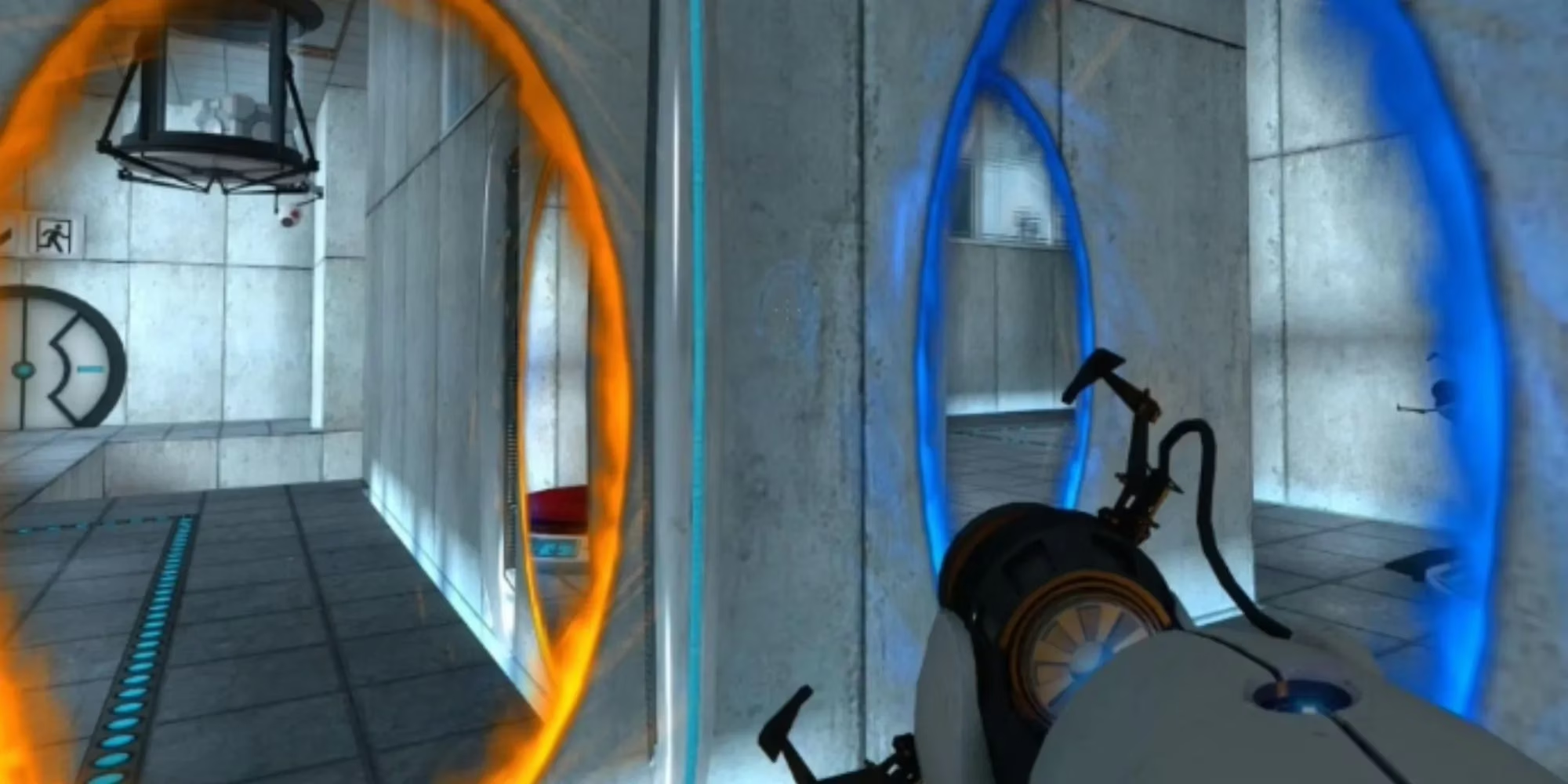
Few games have earned the kind of formal academic validation that the Portal series enjoys. Formal studies have actually identified positive effects from Portal on ADHD symptoms, which makes intuitive sense once the mechanics are examined. The series casts the player as a test subject navigating a series of physics-based puzzle chambers, wielding a portal gun that bends space itself.
Each stage requires spatial reasoning, creative problem-solving, and the ability to hold multiple variables in mind simultaneously—skills that exercise executive function in a playful, low-pressure format. The game trains the brain while the player merely believes they're having fun. An additional benefit lies in Portal's cooperative mode: two players must communicate and problem-solve together, opening the door to valuable social experiences and cognitive growth through shared effort.
PowerWash Simulator: The Meditative Joy of Completing Tasks
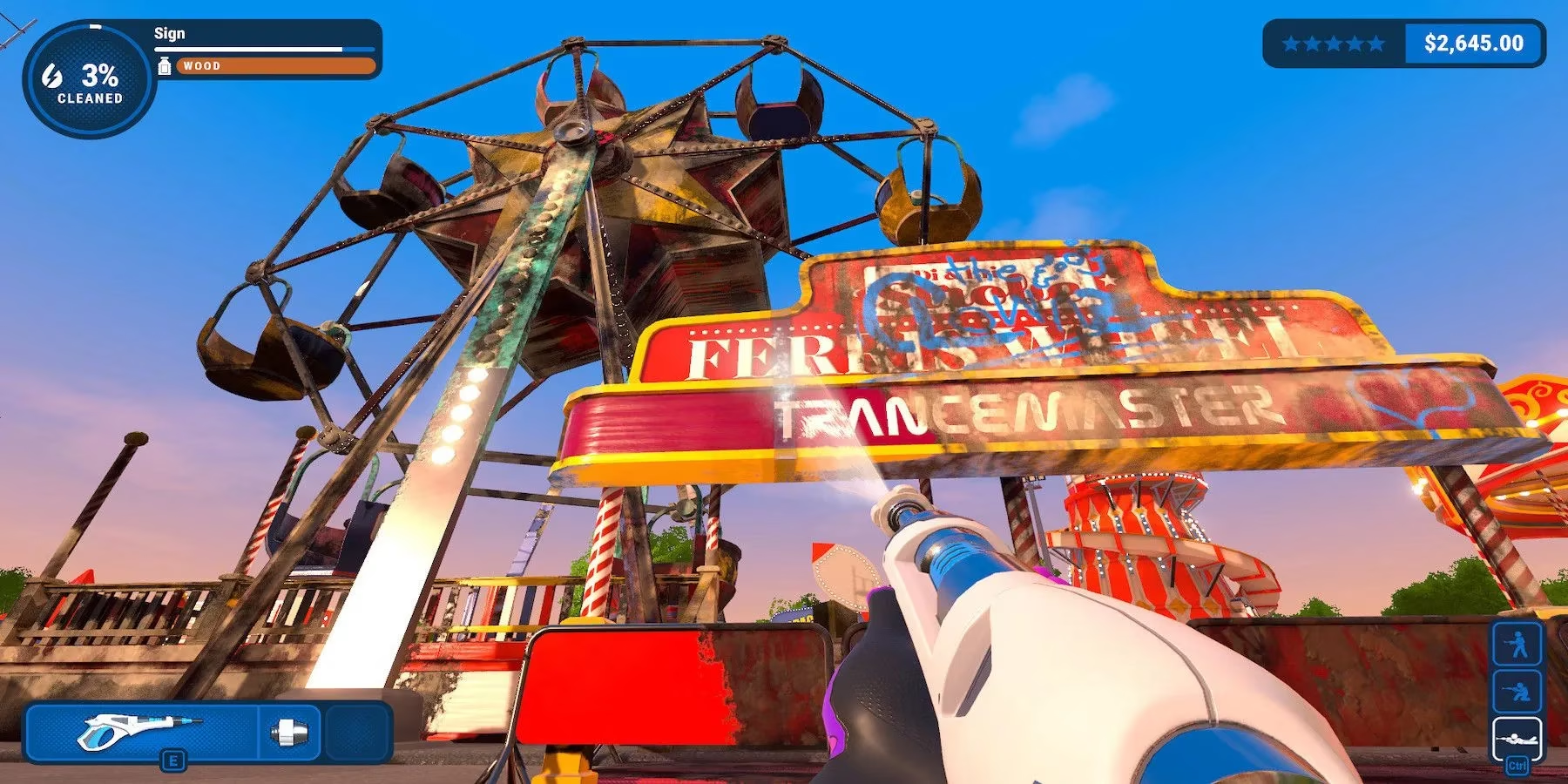
There is something profoundly soothing about PowerWash Simulator, a game whose entire premise could not be simpler: clean every surface in a level using a high-pressure washer. What makes it remarkable, however, is how deeply satisfying this simplicity becomes. Every surface cleaned advances progress through the level, and each completed section triggers an audio cue that delivers a small dopamine-friendly confirmation of accomplishment.
This game functions as a passive checklist experience rather than a demanding puzzle. The player can wander freely, spraying dirt from patios, vehicles, and building facades without pressure or time limits. For someone with ADHD who simply wants to zone out while still feeling productive, PowerWash Simulator offers exactly that. Like Minecraft, it also pairs beautifully with background music or podcasts, allowing the brain to engage at its own preferred intensity level.
Call of Duty: Short Bursts of Hollywood-Style Engagement
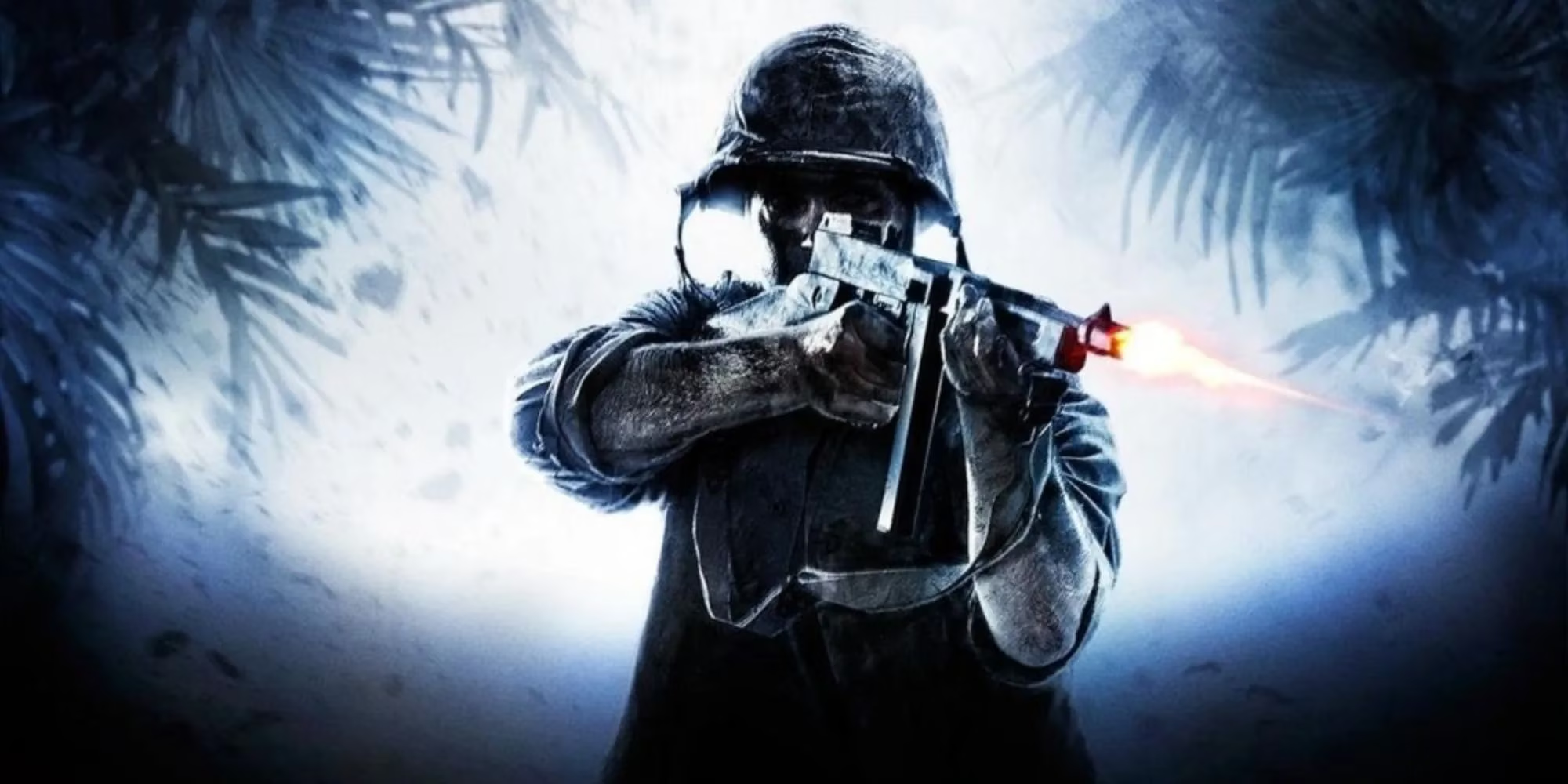
The Call of Duty series often receives dismissive commentary from certain corners of gaming culture, but for players with ADHD, these games offer something genuinely valuable: effective attention capture in short, digestible bursts. The single-player campaigns are tightly structured affairs featuring explosive, Hollywood-like setpieces that keep the experience both entertaining and easy to follow.
In the multiplayer arena, the experience shifts to a moment-to-moment, high-intensity rhythm where the player engages in repeated short rounds of action. This structure aligns well with attention spans that thrive on frequent shifts and rapid feedback. Compared to the more methodical pacing of Counter-Strike, Call of Duty remains considerably more accessible to casual players, making it an excellent entry point for neurodivergent gamers seeking adrenaline without overwhelming complexity.
Subnautica: The Freedom to Dive Deep or Drift Wide
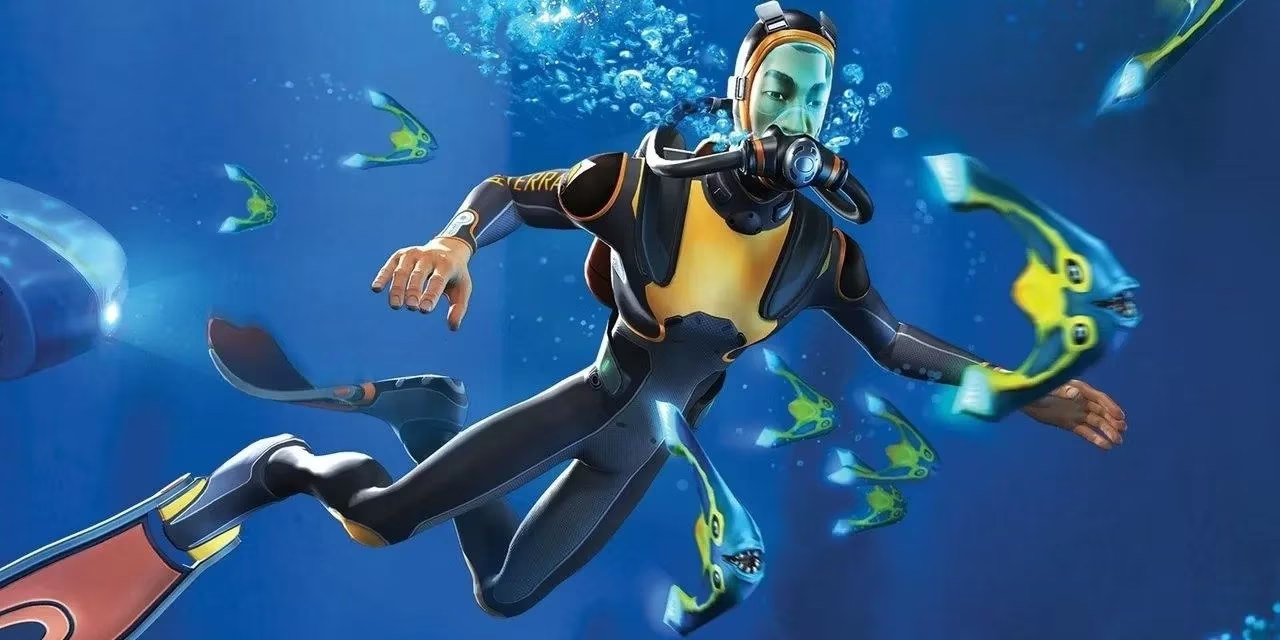
For those drawn to narrative but intimidated by dense exposition, Subnautica offers a perfect middle path. It functions almost like a more story-focused version of Minecraft—featuring freeform sandbox exploration alongside a genuinely engrossing, yet pleasantly lightweight, narrative arc. The player survives on an alien ocean world, gradually uncovering its mysteries while managing crafting, base-building, and basic survival mechanics.
What makes Subnautica particularly beautiful for ADHD minds is the freedom it provides. When focus on one task begins to fray, there is always another objective waiting in the depths—literally and figuratively. A player can abandon base construction to explore a glowing cave, then pivot to gathering rare resources, then return to the story when ready. For those who tend toward hyper-focus, conversely, hours can vanish into a single obsessive project without interruption. The game accommodates both extremes without judgment.
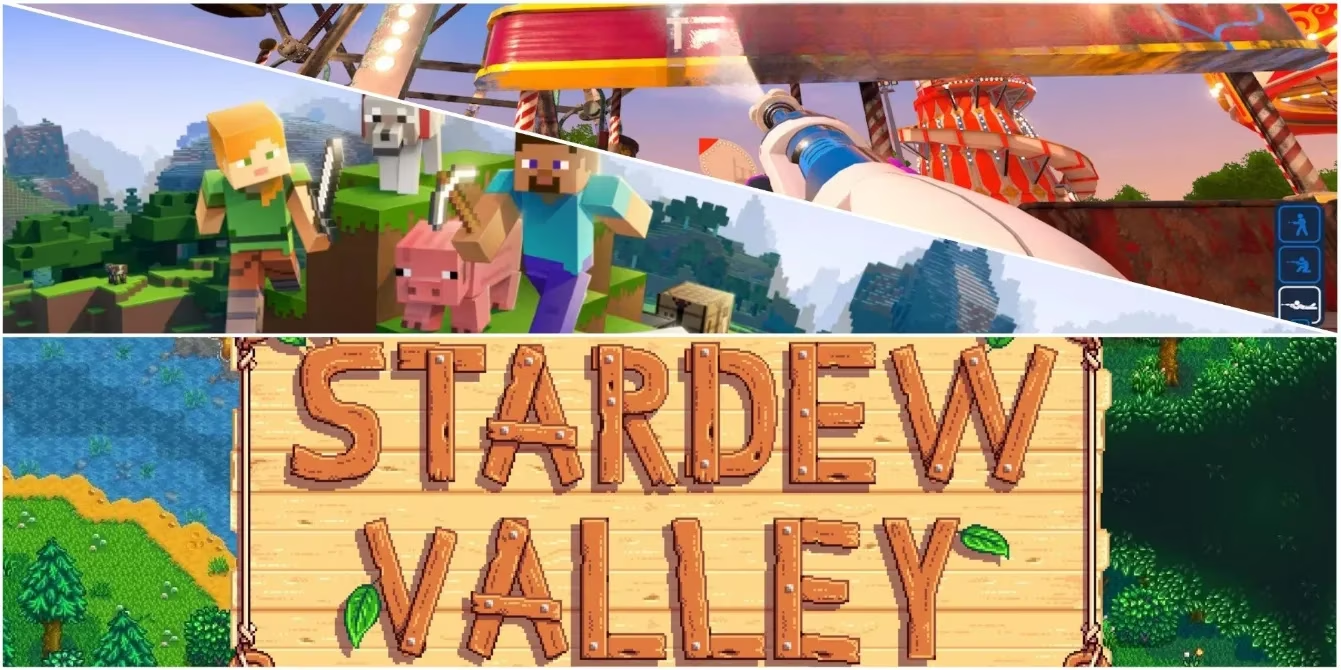
Stardew Valley: Balancing Structure and Freedom at the Player's Own Pace
There are farming games, and then there is Stardew Valley—a title that has far surpassed its genre label to become a beloved institution. Inheriting a rundown farm from a deceased grandfather, the player arrives in Pelican Town and gradually builds a new life. Farming forms the backbone of the experience, but it is only one thread in a rich tapestry that includes fishing, mining, exploration, crafting, and the slow cultivation of meaningful relationships with the townsfolk.
What makes Stardew Valley exceptional for players with ADHD is its masterful balance of open-ended freedom and gentle structure. The in-game day cycle provides a soft rhythm without imposing harsh deadlines, while the low-stakes nature of most activities means failure carries minimal consequences. Players can pursue goals in whatever order feels right, at a pace they find comfortable. It is a game that says: your way is fine—a message ADHD minds rarely hear often enough.
The Emerging Science of Play
As more studies examine the intersection of gaming and ADHD, the evidence continues to suggest that interactive entertainment can serve as far more than mere escapism. Video game therapy has become a legitimate area of research, with findings pointing toward improved executive function, better spatial reasoning, and enhanced social connection among neurodivergent players.
The seven games explored here are not cures, nor are they replacements for professional treatment. But they are proof that well-designed interactive experiences can meet ADHD minds where they actually live—in the spaces between hyper-focus and distraction, between structure and chaos, between the need for stimulation and the longing for calm. For the millions who play them, these games offer something invaluable: a world that finally matches the way their brains were designed to engage.