An Underwater Desert Temple: A Rare Minecraft World Generation Surprise
A Minecraft player stumbled upon a desert temple submerged in a river—an extremely rare world-generation glitch due to a tiny desert biome.
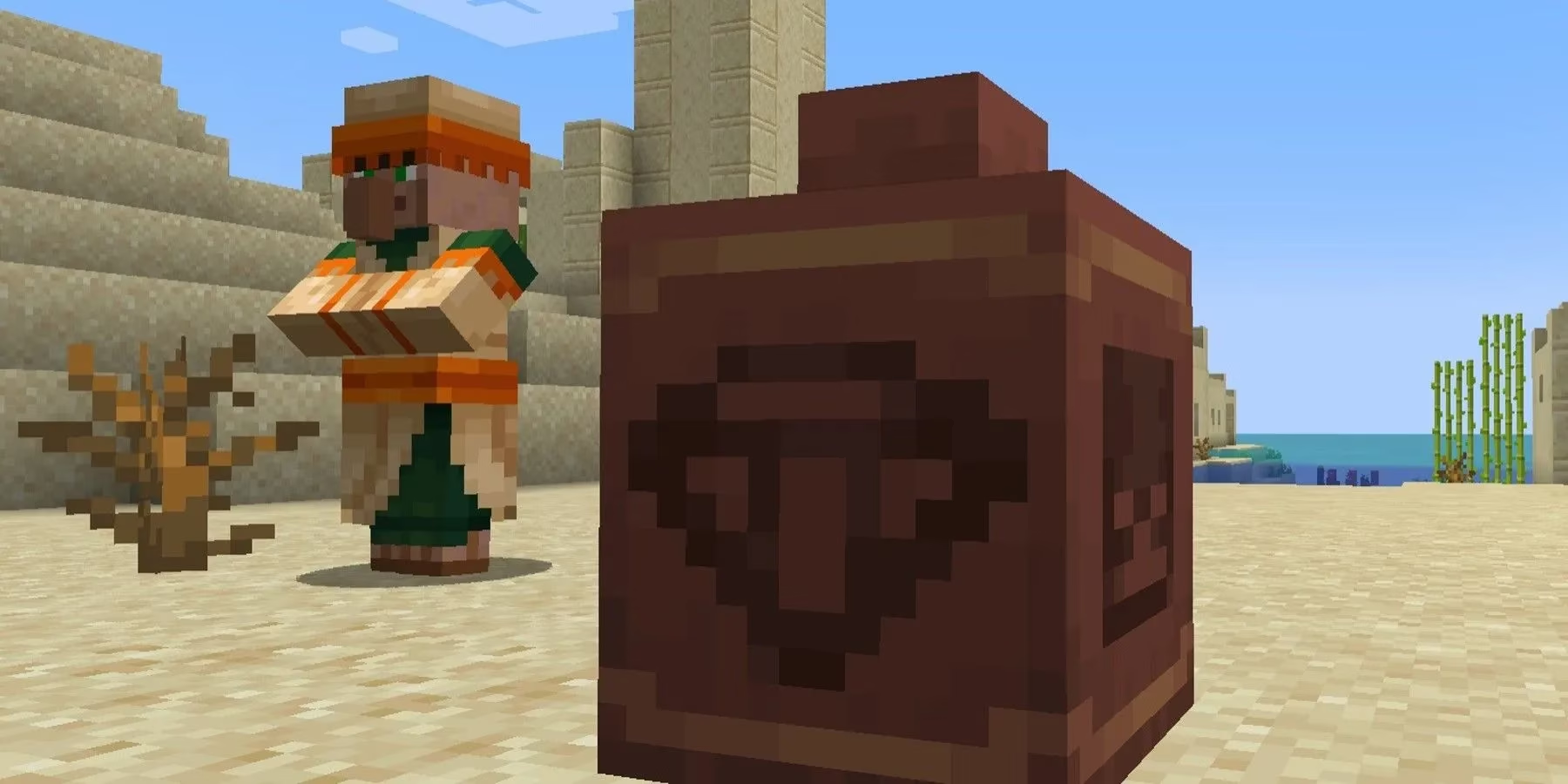
The sun was rising over a freshly generated Minecraft world as SpicyDeluxeMcCrispy, a seasoned explorer, set out across a sprawling desert biome. The year was 2024, but even after countless updates and refinements, the game's infinite worlds still held secrets that could make a veteran raise an eyebrow. Armed with a wooden pickaxe and a bundle of bread, they trekked past cacti and sandstone until the arid landscape abruptly gave way to the shimmering surface of a river. And there, where the water met the sand, something impossible caught their eye: the unmistakable orange-and-blue peak of a desert temple, most of its body swallowed by the river.
SpicyDeluxeMcCrispy stopped dead. Desert temples were supposed to generate in dry, sandy expanses—not at the bottom of a river. Yet there it was, its iconic terracotta patterns rippling under a layer of water, the secret basement chamber probably flooded beyond recognition. They waded in, half expecting the world to glitch and correct itself, but the temple remained, a silent monument to Minecraft's famously quirky world generation. They snapped screenshots and shared the discovery online, where it quickly drew gasps from fellow players.
A Legacy of Improbable Generations
This was far from the first time Minecraft's procedural engine had thrown logic out the window. Over the years, players had stumbled upon floating villages suspended in midair, ocean monuments buried deep inside mountains, and stronghold libraries intersecting with lava lakes. Most famously, the game sometimes placed entire villages across biome borders, so that one half of a house sat in a desert while the other rested in a snowy tundra. These incidents were almost always the result of how Minecraft stitches biomes together: the world generator carves terrain in large chunks, and sometimes a tiny, single-digit-blocks-wide desert biome could spawn smack in the middle of a river, just large enough to host a structure.
Experts in the community pointed out that this Underwater Temple was likely a product of such a micro-biome. The desert patch might have been no more than a few blocks wide, but that was enough for the structure-generation algorithm to drop a full temple. The chances of a structure spawning inside a biome that small were astronomically low, yet not zero. In version after version, from 1.18's Caves & Cliffs to the more recent 1.21 update in 2025, Mojang had worked tirelessly to smooth out these anomalies, but they never quite eradicated them—and many players were glad for that.
Why Players Love These Glitches
For all the polishing Minecraft receives, the odd world-generation bug has become part of the game's charm. They transform an ordinary play session into a treasure hunt. A player might be following a map to a woodland mansion and suddenly find the mansion's doorstep opening into the void of a ravine. Others have found entire ruined portals materialized inside ocean monuments, creating surreal flooded Nether structures. These moments pepper the community with stories, memes, and YouTube videos that keep the game's social fabric vibrant.
SpicyDeluxeMcCrispy's underwater temple quickly became one such story. In the comments, players exchanged their own bizarre finds: a desert well at the bottom of a frozen ocean, a shipwreck balanced on a tree in a jungle, a village that somehow spawned entirely inside a stronghold. The shared experience of awe and laughter reminded everyone why Minecraft's world generation, even with its flaws, remained a masterpiece of emergent storytelling.
Looking Ahead: 2026 and Beyond
Now in 2026, Minecraft has continued to evolve. Since the Trial Chambers update of 2024, the game has seen the introduction of even more ambitious structures and mechanics. The archaeology system, first teased years ago, is now a full-fledged adventure pillar, letting players excavate ruins and uncover lore. Mojang's latest content drops have focused on dynamic events—storms that reshape terrain, wandering trader caravans that set up temporary camps—making each world feel more alive than ever.
Yet despite all the new technology, the core magic persists. Recent snapshot versions have introduced a structure called the "Whispering Vault," an underground labyrinth that remixes itself every time it's entered, proving that Mojang still delights in controlled chaos. And through it all, the community continues to find those beautiful mistakes: a Cherry Grove biome with a desert pyramid nestled among pink petals, or a Nether fortress half-frozen in Basalt Deltas.
The legend of SpicyDeluxeMcCrispy's river-bound desert temple has become a nostalgic touchstone, a reminder that even in a thoroughly charted game, improbability is always one block away. As players venture into the newer Nether biomes and the revamped End islands, they do so knowing that the next screenshot-worthy glitch could be right around the corner—waiting in a river where a temple has no right to be.